For much of the last 17 years, the stock market has largely followed a bullish trajectory, with the Dow Jones Industrial Average, S&P 500, and Nasdaq Composite demonstrating a consistent upward trend since the bottom after the Great Recession in March 2009. The only significant interruptions to this rally occurred during the brief COVID-19 crash in early 2020 and the bear market that spanned nine months in 2022. However, the inevitability of market corrections and downturns is a fundamental characteristic of stock market cycles, leading many to speculate about when and why the current bullish phase might falter.
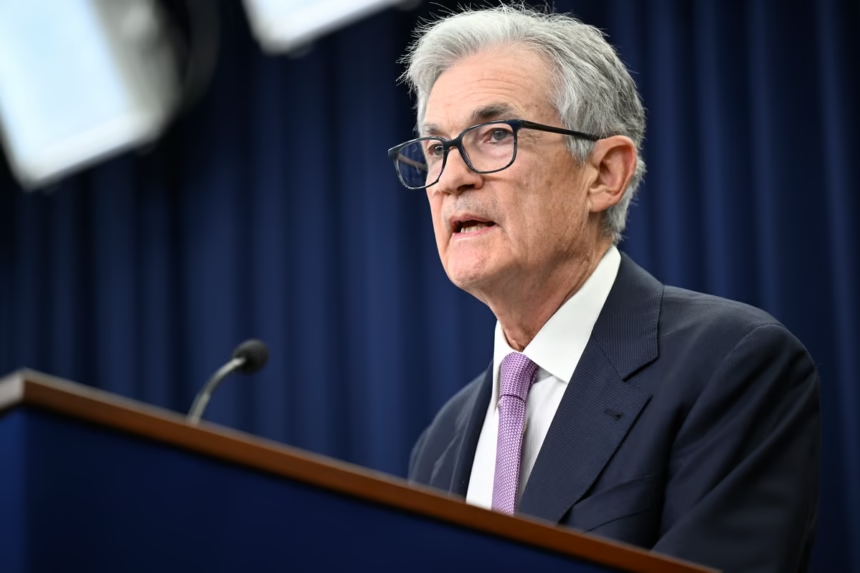
As market analysts observe potential catalysts that could disrupt the ongoing artificial intelligence-driven bull market, one of the most significant risks arises from a looming shift in leadership at the Federal Reserve, the U.S. central bank. Jerome Powell’s term as Fed chair is set to conclude soon, prompting speculation about his successor, Kevin Warsh, who has been nominated by former President Donald Trump.
Warsh’s nomination could represent a pivotal moment for the financial landscape, as he aims to become the 17th Federal Reserve chair since its inception in 1914. Having previously served on the Federal Open Market Committee (FOMC) from 2006 to 2011, Warsh faced the daunting task of navigating the U.S. economy through the turbulence of the Great Recession. His experience positions him as a knowledgeable candidate; however, his past actions and outspoken critiques of the Fed’s monetary policies may lead to unease among investors.
A significant issue Warsh will confront is the Federal Reserve’s balance sheet, which has ballooned to approximately $6.6 trillion after quantitative tightening efforts to reduce it from its peak of nearly $9 trillion. Warsh has publicly criticized the Fed’s expansive balance sheet and has expressed a desire to see substantial deleveraging during his potential term. Yet, this ambition raises concerns about how such a reduction would be executed without destabilizing the stock market. Historically, a reduction in long-term Treasury bonds and mortgage-backed securities tends to elevate yields and consequently increase interest rates, directly contradicting investor expectations for lower rates.
Moreover, Warsh’s record indicates a focus on combating inflation over promoting employment—a dual mandate of the Federal Reserve. His previous voting pattern reveals a tendency to prioritize inflation concerns, even during economic downturns, suggesting that he may be less inclined to support aggressive cuts to interest rates, which would be at odds with Trump’s insistence on lower borrowing costs since assuming the presidency.
Additionally, Warsh’s approach may lead to heightened divisions within the FOMC. The committee’s history of dissenting opinions under Powell’s leadership has signaled a need for cohesiveness among its members to maintain market stability and investor confidence. With Warsh potentially exacerbating current divisions rather than fostering unity, concerns arise about the implications for the Fed’s credibility.
Amidst this backdrop of potential changes and the complexities of interest rate policies, Wall Street remains vigilant, monitoring how these shifts in leadership and monetary policies will shape the future of the market. Investors are particularly attuned to any signs of discord within the FOMC, as a disjointed committee could yield negative reactions in the markets, further complicating an already fragile economic landscape.