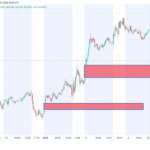
The Pound Sterling (GBP) experienced a slight decline against the US Dollar (USD), trading near 1.3490 during the European session on Wednesday. The currency pair, GBP/USD, found itself under mild pressure as the US Dollar strengthened ahead of the release of key economic data from the United States. Investors are particularly focused on the upcoming ADP Employment Change and ISM Services Purchasing Managers’ Index (PMI) data for December, in addition to the JOLTS Job Openings data for November, set to be published during the North American session.
At that moment, the US Dollar Index (DXY), which measures the dollar’s strength against a basket of six major currencies, edged up to approximately 98.70. Economic analysts are particularly keen on US employment-related data, as these figures could provide crucial insights into the Federal Reserve’s monetary policy trajectory. Expectations are set for the ADP report to reveal a gain of 47,000 private sector jobs, reversing the previous month’s loss of 32,000 jobs. Additionally, the JOLTS data is anticipated to show around 7.64 million job openings, closely aligned with October’s figure of 7.67 million.
Should the US job market data point toward improvement, it could diminish the likelihood of further interest rate cuts by the Federal Reserve in the near future. Conversely, disappointing results could prompt a reevaluation of monetary policy.
The US ISM Services PMI is expected to moderate, with projections set at 52.3, a slight decrease from November’s 52.6, suggesting continued but slower service sector expansion.
Meanwhile, the Pound Sterling maintains a relatively stable trajectory against its major currency counterparts amid unease related to recent US military activities in Venezuela, including the capture of President Nicolas Maduro over drug-related charges. Despite these geopolitical tensions, domestic UK economic indicators have remained light, leading to greater reliance on market sentiment to influence the Pound’s performance.
From a monetary policy perspective, the Bank of England (BoE) is not expected to make aggressive easing moves this year, as inflation remains significantly above its 2% target. However, given the vulnerabilities within the UK labor market—evidenced by an increase in the unemployment rate to 5.1% in the three months leading up to October, the highest rate since March 2021—the BoE’s policy outlook is expected to trend downward.
A significant forthcoming event for the GBP/USD pair is the Nonfarm Payrolls (NFP) data scheduled for release on Friday, which is anticipated to provide additional clarity regarding the US employment landscape. In 2025, the Federal Reserve had already implemented three rate cuts of 25 basis points, lowering rates to a range of 3.50%-3.75% due to sluggish labor market conditions.
On the technical front, GBP/USD is trading at 1.3495, buoyed by the 20-day Exponential Moving Average (EMA) at 1.3445, which suggests an immediate bullish bias as long as the price remains above this threshold. The 14-day Relative Strength Index (RSI), positioned at 60, indicates a neutral-to-bullish momentum without appearing overbought. This technical landscape incorporates Fibonacci retracement levels, indicating support and resistance zones, with immediate support identified at the 61.8% level of 1.3495. A decisive close above this could open the path toward the 78.6% retracement level at 1.3625, while a failure to maintain 1.3495 may prompt price consolidation, with the EMA at 1.3445 acting as a near-term support floor.
Overall, the economic landscape is shaped by various factors, including labor market conditions in both the US and UK, and investors remain attentively poised for upcoming data releases that could steer monetary policy direction in the coming weeks.