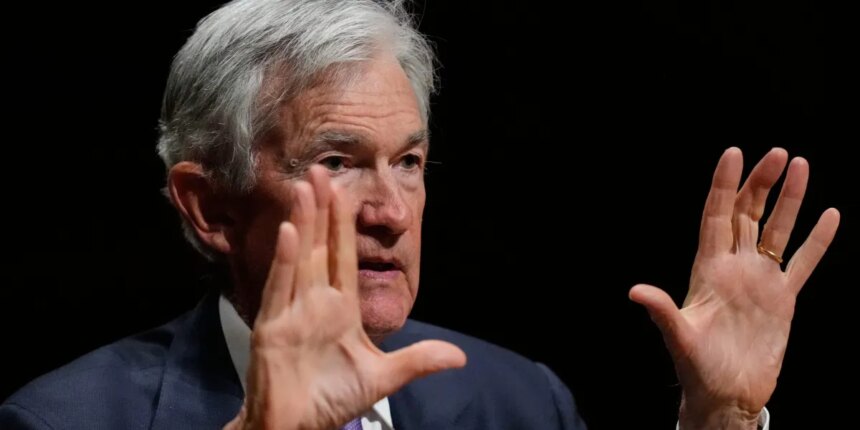
Federal Reserve Chair Jerome Powell delivered a stark assessment of the United States’ fiscal situation during a recent session with Harvard economics students. He described the nation’s $39 trillion debt as manageable in the short term but underscored the importance of addressing its unsustainable trajectory.
Powell remarked that while “the level of the debt is not unsustainable,” the current trajectory is alarming, warning that inaction could lead to dire consequences. “It will not end well if we don’t do something fairly soon,” he stated, echoing concerns he has raised consistently over the years.
During the discussion, which drew around 400 students, Powell responded to questions about the debt’s implications for national repayment systems, acknowledging the uncertainty surrounding a definitive breaking point. He cited Japan’s higher debt-to-GDP ratio but emphasized that the U.S. debt is growing at a rate that outpaces economic growth, a trend he described as unsustainable in the long term.
Current projections indicate that net interest payments on the national debt will exceed $1 trillion by 2026. This figure is almost three times the amount paid in 2020, with payments already surpassing defense spending for the initial months of the current fiscal year. The Congressional Budget Office anticipates that public debt will balloon from 101% of GDP today to 120% by 2036, potentially breaking post-World War II records.
Despite the alarming figures, Powell recommended a balanced approach rather than outright debt reduction. He suggested achieving a “primary balance” where economic growth exceeds debt growth. However, he acknowledged that fiscal policy falls outside his purview and humorously noted that his warnings often go unheard in Washington.
Although Powell’s warnings about the debt trajectory have been consistent, the reaction—or lack thereof—from lawmakers may complicate the path forward. Closing the structural primary deficit requires politically sensitive decisions, such as increasing revenues or making cuts to significant programs like Medicare and Social Security.
The backdrop of Powell’s remarks underscores the wider implications for the central bank. He has championed the Fed’s political independence and emphasized the need to focus on its core missions—maximum employment and price stability—without succumbing to external pressures. A potential fiscal crisis that could force the Fed to intervene might blur these critical boundaries.
Interestingly, calls for fiscal caution have been echoed by former Fed Chair Janet Yellen, who noted that rising debt could limit the Fed’s ability to tackle unemployment and inflation, suggesting that lawmakers have not fully grasped the associated risks. Powell’s statements reflect a broader concern within economic circles regarding effective fiscal reform.
While Powell’s discussion at Harvard brought attention to the seriousness of U.S. debt, it also highlighted the complexities of addressing the issue. Effective solutions may require a careful examination of trade-offs rather than simplistic directives for lawmakers. The urgency for change is clear, as Powell succinctly warned that, without action, the situation “will not end well.” His comments may resonate beyond the classroom, offering significant insights as he approaches the end of his term in May 2026.