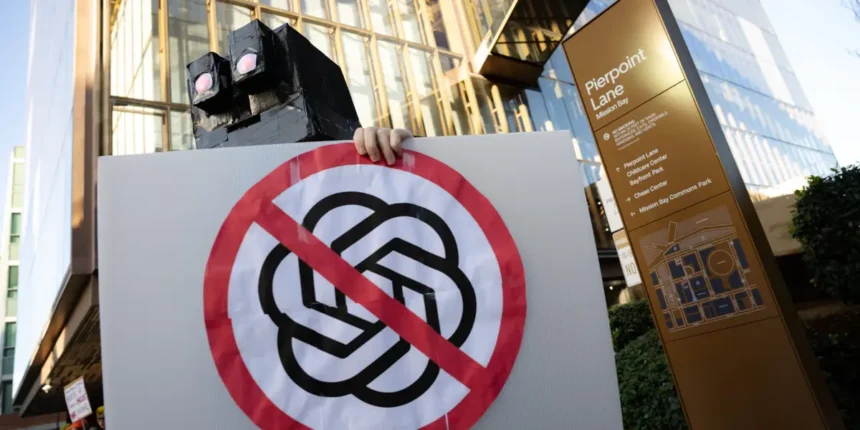
OpenAI is facing mounting criticism following its recent contract with the Pentagon, igniting a new wave of protest among various groups. On Tuesday evening, around 40 to 50 individuals convened outside OpenAI’s headquarters in Mission Bay, San Francisco, united by a shared skepticism of the tech company’s actions and policies. This gathering was part of an emerging movement known as QuitGPT, where protesters articulated a diverse array of concerns.
The controversy for OpenAI intensified after it signed a deal with the Pentagon just hours after President Donald Trump ordered federal agencies to halt the use of Anthropic’s AI tool, Claude. Anthropic had sought contractual assurances against mass surveillance and the development of fully autonomous weapons. When negotiations failed, OpenAI’s swift acceptance of a Pentagon contract drew criticism not only for its timing but also for perceived ethical implications. The backlash has notably shifted some public support to Anthropic, with celebrities like Katy Perry promoting Claude AI instead.
In response to the uproar, OpenAI CEO Sam Altman took to social media to announce that the company is amending its Pentagon contract to include specific protections against the surveillance of U.S. citizens and to restrict access by intelligence agencies like the NSA without separate modifications. Altman acknowledged the haste of the deal, admitting it was poorly communicated and seemed “opportunistic and sloppy.” The Pentagon has yet to respond to inquiries regarding the revised agreement.
At the protest, numerous attendees expressed concerns beyond the Pentagon deal. Many highlighted the environmental impact associated with data centers required by AI technology. Protester Perrin Milliken voiced her frustrations about the increasing water and electricity demands posed by these facilities, arguing that they prioritize AI over essential human resources. “I want water to drink, not AI to think,” proclaimed one sign at the event.
The protest also served as a platform to discuss broader issues such as wealth inequality, with many signs targeting tech billionaires and criticizing their lavish lifestyles while citizens struggle with affordable housing. Speaker Sarah Gao accused Altman of embodying the problematic nature of wealth concentration, citing the extravagant features of his San Francisco home as emblematic of a greedy tech elite. The crowd reacted with booing when she criticized the billionaire’s influence on public policy.
Some attendees expressed a principled refusal to engage with AI. Meghan Matson articulated her longstanding belief that AI represents a harmful force, asserting that its rise threatens journalism, art, and the overall expression of humanity. Other creative protest materials, such as chalk messages on the sidewalk, echoed similar sentiments: “Stop AI stealing art, writing, electricity, water, jobs.”
Among the crowd was a tech worker who supports AI in principle but opposes the Pentagon deal. This individual shared that their daily interaction with AI technologies is overshadowed by concerns about their potential misuse in undermining freedoms and civil liberties. With a robot mask crafted from cardboard and LED lights, they sought to draw attention to the issue, expressing hope that their grassroots efforts might resonate more than corporate advertising.
The protest represents a growing unease within the community regarding the ethical implications of AI advancements and raises urgent questions about the responsibilities of tech giants in the modern landscape.