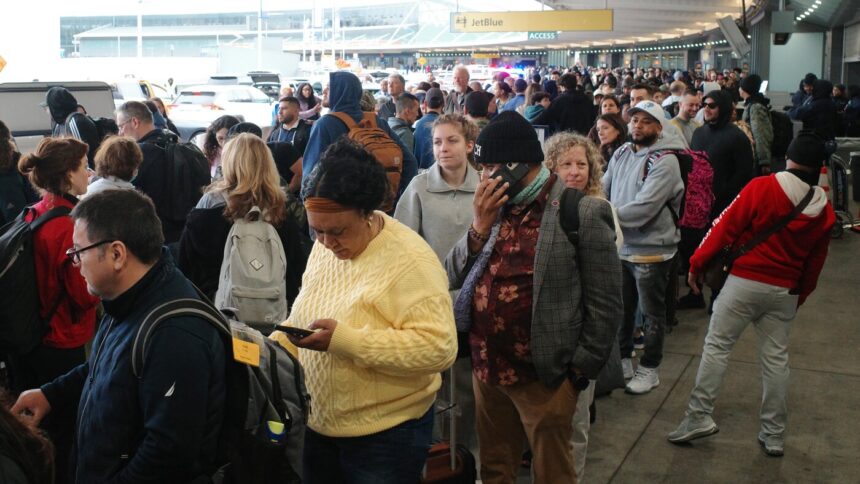
Travelers at John F. Kennedy International Airport in New York have been experiencing unprecedented delays at TSA screening, largely due to a partial government shutdown that has stretched into several weeks. Many passengers are finding themselves stuck in lines that extend not only through the airport but even onto sidewalks outside, where wait times have surged to over four hours, according to reports from the Transportation Security Administration (TSA).
This situation has impacted countless flyers who are now grappling with the very real possibility of missing their flights. Sean Cudahy, an aviation reporter from The Points Guy travel website, explained, “Airlines are trying to work with passengers as best they can, but it’s certainly not guaranteed that they will accommodate those affected by these delays.”
As a response to the situation, several airlines have begun implementing more flexible rebooking policies in an effort to assist customers. However, the ongoing standoff in Washington regarding TSA funding means that travelers may still face long lines for the foreseeable future.
For affected travelers, understanding wait times ahead of time can be crucial. Some airports, like Charlotte Douglas International, post TSA wait times, while others require checking social media for updates. Unfortunately, resources like the MyTSA app are currently unavailable. Wait times can fluctuate significantly, influenced by the number of TSA employees reporting for duty. For instance, Houston’s George Bush Intercontinental Airport recently reported wait times varying from 90 minutes to over two hours, while Atlanta’s Hartsfield-Jackson Airport advised passengers to allow at least four hours for TSA.
Upon arriving at a congested airport, Cudahy recommends that travelers seek assistance from airport personnel to find alternative lines that may have shorter waits. In the event that passengers find themselves ensnared in a lengthy queue, it’s advisable to check airline apps for available flight options, especially if they did not book a basic economy fare which usually prevents modifications. Passengers should also be vigilant about rebooking flights quickly to avoid being labeled as a no-show.
Should a traveler ultimately miss a flight, it’s critical to contact the airline through various means—whether online, via phone, or at service desks. Utilizing frequent flyer status can expedite the rebooking process, and if the traveler has lounge access, the shorter lines at these locations may provide a quicker resolution. While airlines are not obliged to accommodate passengers affected by TSA delays, many are offering some flexibility. For example, Delta has issued a waiver allowing passengers to adjust flight schedules while still in line, and United has mirrored this policy in certain airports.
Travelers are advised to explore alternative transportation methods, such as rental cars or trains, especially if rebooking options are limited or costly. If possible, choosing flights during off-peak times, which could potentially ease long TSA lines, may also be a prudent approach. Airlines have indicated that peak travel days occur on Fridays and Sundays, while midweek flights generally show greater flexibility.
Passengers facing significant disruptions may also consider requesting refunds or travel vouchers from their airlines and exploring available travel insurance options. However, it’s important to note that many standard travel insurance policies do not cover flight misses due to TSA delays, making it crucial for travelers to verify their specific coverage limitations.
As the government works to resolve this situation, the patience and understanding of travelers will be key in navigating one of the most challenging travel landscapes many have faced in recent times.