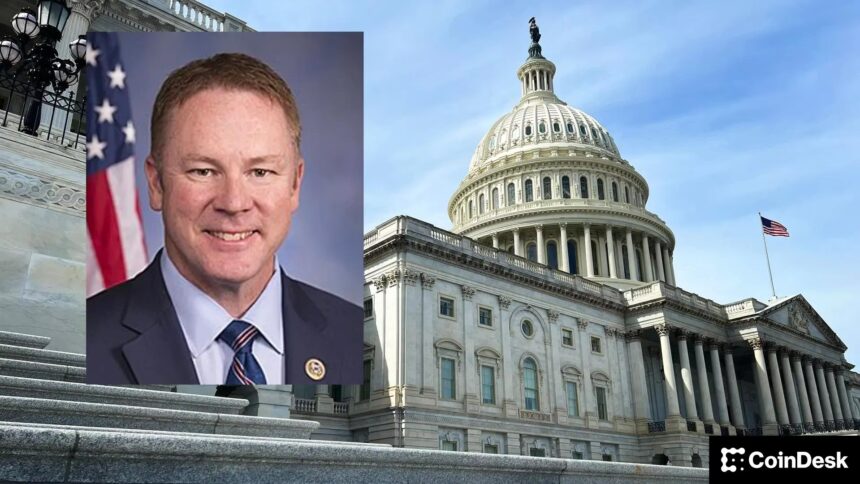
A significant development has emerged in the cryptocurrency landscape as Rep. Warren Davidson (R-Ohio) recently unveiled the Bitcoin for America Act. This proposed legislation aims to empower individuals and businesses by allowing them to pay federal taxes using Bitcoin, without incurring capital gains liability. Furthermore, the act seeks to channel these payments into a newly proposed U.S. Strategic Bitcoin Reserve, which has yet to be established.
Davidson, an advocate for Bitcoin since 2012, articulated his vision for this bill on his official website, emphasizing its intent to bolster the U.S. economy and enhance the nation’s leadership in the global digital asset space. He stated, “The Bitcoin for America Act marks an important step toward modernizing our financial systems and embracing the innovation that millions of Americans already use every day.” He believes that allowing individuals to pay taxes with Bitcoin could lead to the accumulation of a tangible asset that appreciates over time, especially in contrast to the steadily depreciating U.S. dollar facing inflationary challenges.
In a discussion with the Bitcoin Policy Institute, Davidson expressed regret over Congress’s previous decisions regarding Bitcoin investments, recalling a time in 2016 when Bitcoin’s value hovered around $500 to $600. He critiqued Congress’s missed opportunities, pondering the positive repercussions for a nation grappling with a staggering $38 trillion debt.
Conner Brown, the Head of Strategy at the Bitcoin Policy Institute, supported Davidson’s initiative, proclaiming that it sets a precedent for a voluntary, market-driven approach to accumulating national Bitcoin reserves. This model contrasts with potential top-down mandates and would allow Americans to contribute Bitcoin through tax payments.
The backdrop for this legislation recalls President Donald Trump’s executive order from early March, which sought to establish a Strategic Bitcoin Reserve. However, implementation has stalled, with White House and Treasury officials indicating that Congressional action may be necessary. Most proponents of the reserve were disappointed when the president clarified that taxpayer dollars would not be used to fund it; Davidson’s bill presents a novel approach by allowing taxpayers to willingly contribute their assets to the reserve while enjoying a capital gains exemption.
Currently, the White House’s cryptocurrency vault is estimated to contain about 198,012 Bitcoin, valued at approximately $17 billion, although the tracking system for this reserve is temporarily unavailable. Davidson’s bill arrives amid a significant decline in Bitcoin’s market value, adding context to its introduction during a complex period.
While the bill could potentially serve as a focal point for future negotiations on various crypto tax provisions, it coincides with intense lobbying efforts related to a Senate bill aimed at establishing a structured framework for the crypto market. As Davidson’s initiative unfolds, it remains to be seen how it will influence the broader legislative conversation surrounding cryptocurrency taxation and regulation.