







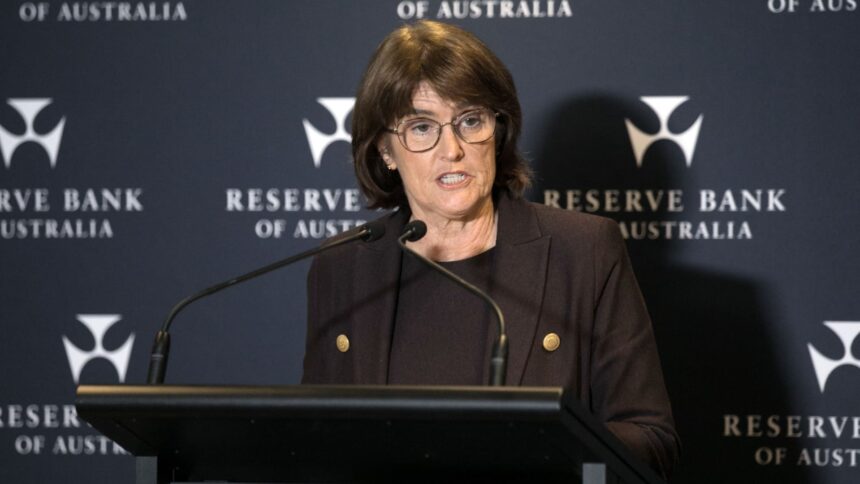
Australia’s central bank has raised benchmark policy rates for the second consecutive time, pushing rates to 4.1%, the highest level since April 2025. This latest increase of 25 basis points aligns with analysts’ expectations amid persistent inflationary pressures. Despite a substantial decline in inflation since its peak in 2022, the Reserve Bank of Australia (RBA) noted a significant rise in inflation during the latter half of 2025, now remaining above the central bank’s upper threshold of 3%.
In its statement, the RBA pointed to the ongoing conflict in the Middle East as a contributing factor to global and domestic inflationary risks. The bank indicated that inflation is likely to exceed target levels for an extended period, necessitating the recent rate hike.
Paul Bloxham, chief economist for Australia, New Zealand, and global commodities at HSBC, discussed the driving factors behind the RBA’s decision. He emphasized the strong domestic labor market and the positive output gap, asserting that inflation levels are unsustainably high. Bloxham expressed concerns that the ongoing Iran conflict would continue to elevate inflation in Australia, compelling the RBA to act swiftly instead of waiting for more clarity on global circumstances.
The decision to increase rates was not unanimous, passing with a narrow vote of five in favor and four against. The RBA’s sentiment echoes warnings from Deputy Governor Andrew Hauser, who acknowledged the problematic nature of current inflation levels. Hauser projected that inflation could return to the bank’s target range of 2%-3% by late 2026 or early 2027, and potentially stabilize at the midpoint of that range by 2028.
Earlier this year, the RBA had forecast that headline inflation would peak at 4.2% around mid-2026 before declining to slightly below 3% by mid-2027. However, due to the recent oil supply disruptions prompted by the Iran war, these inflation estimates may be revised upward. As of the last quarter of 2025, inflation stood at 3.6% for December, with a monthly increase registering at 3.8% in January, slightly surpassing expectations.
The Australian economy demonstrated resilience, with fourth-quarter GDP growth surpassing forecasts at 2.6%. This robust economic performance has provided the central bank the latitude to maintain elevated interest rates. Following the announcement of the rate hike, the S&P/ASX200 index saw a modest increase of 0.11%.


