Retail investors are currently channeling their funds into what has been termed the “debasement trade,” a strategy identified by JPMorgan that reflects growing concerns over geopolitical uncertainties, inflation projections, and the stability of fiat currencies. This trade is characterized by a rising preference for assets like gold and bitcoin, while the U.S. dollar has been experiencing significant depreciation.
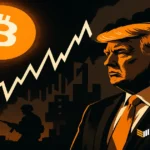
The concept of the debasement trade encapsulates a broad range of worries. Investors are increasingly anxious about escalating government deficits in major economies, which some fear could lead to “debt debasement.” This sentiment is exacerbated by a growing skepticism regarding the ability of central banks to manage these fiscal challenges in a politically independent manner. Recent actions by political figures, including former President Donald Trump—who has publicly criticized Federal Reserve leadership—have intensified these concerns.
As part of the debasement trade, gold futures have witnessed a remarkable surge, gaining nearly 48% this year and recently trading above $3,900 per ounce. In stark contrast, the U.S. dollar has suffered a nearly 10% decline in 2025. Bitcoin has also seen significant gains, rising more than 27% year-to-date.
JPMorgan’s analysis highlights a notable shift in retail investors’ confidence, indicated by the increased inflows into bitcoin and gold exchange-traded funds (ETFs), which are popular among smaller investors. Since the White House announced tariff measures earlier this year, flows into these assets have surged. JPMorgan strategist Nikolaos Panigirtzoglou noted that while institutional investors have been acquiring bitcoin and gold futures since 2024, the current buying momentum from retail investors in ETFs outpaces that of institutions.
The data reflects a broader market sentiment that is wary of long-term economic stability, prompting both retail and institutional investors to divert their investments towards assets perceived as safer bets in the face of economic uncertainty. The follow-up to this trend will be closely monitored as investor behaviors evolve amidst ongoing geopolitical and economic developments.