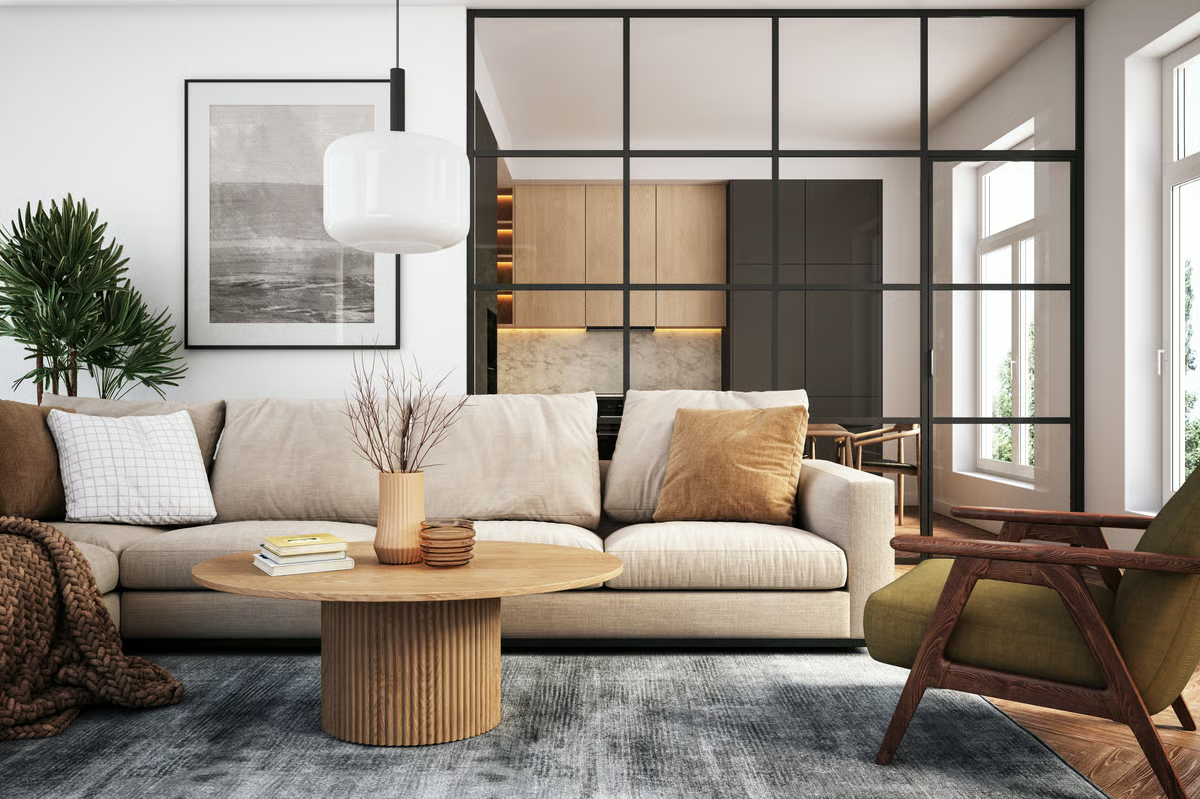
The furniture industry has recently received a welcome reprieve, as the White House announced a delay in planned tariff increases for upholstered furniture, kitchen cabinets, and vanities. This development, which was communicated on December 31, pushes the implementation of higher tariff rates, originally set for January 1, 2026, further into the future while keeping the current 25% tariff in place. In response to this news, shares of RH, a leading player in the luxury furniture market, rose significantly.
CEO Gary Friedman expressed that the company has been navigating one of the most challenging housing markets in decades, which has compounded the adverse effects of tariff uncertainties. Over the past several months, fluctuating tariffs have created a tumultuous environment for management and customers alike. Friedman highlighted that there have been “16 different tariff announcements over the past 10 months,” leading to delays and resource challenges that have trickled down into multiple rounds of pricing adjustments.
While the tariffs continue to cast a shadow over the industry, the delay in raising rates offers a critical opportunity for RH to stabilize its marketing and sourcing strategies. The company is actively mitigating tariff impacts by diversifying its supply chain away from China and exploring alternative sourcing options.
On a more promising note, RH’s financial performance has shown notable resilience, demonstrated by an impressive third-quarter free cash flow of $83 million, which brings the year-to-date total to $198 million. The company has projected a full-year free cash flow between $250 million and $300 million, a significant amount for a firm with a market capitalization of $3.6 billion. This financial robustness positions RH favorably to manage its substantial debt load, which stood at approximately $2.4 billion at the end of the third quarter.
In parallel with its financial growth, RH is pursuing ambitious international expansion efforts. The opening of RH England in 2023 and plans for a Paris location in 2025 reflect the company’s strategy to enhance brand visibility and establish a strong presence in Europe. These new locations are designed not just as retail spaces but as immersive brand experiences that could foster demand for RH’s design services and create lasting impressions.
Looking ahead, the company aims to expand further into European markets with additional openings planned in London and Milan by 2026. However, management has cautioned investors to anticipate some near-term financial repercussions from these expansion initiatives. They have indicated that the international strategy could impact operating margins by around 200 basis points due to start-up costs and investments.
Given the current valuation of 13 times the midpoint of RH’s projected full-year 2025 free cash flow, the stock appears attractive. Nevertheless, the company’s high debt levels and the unpredictable nature of the housing and furniture markets pose considerable risks. Investors may want to approach this opportunity judiciously, perhaps by maintaining smaller positions due to the inherent volatility in furniture sales.
In summary, while the tariff delay is a beneficial development for RH, the company’s robust free cash flow and strategic international expansion efforts are the primary drivers of optimism regarding its future performance.