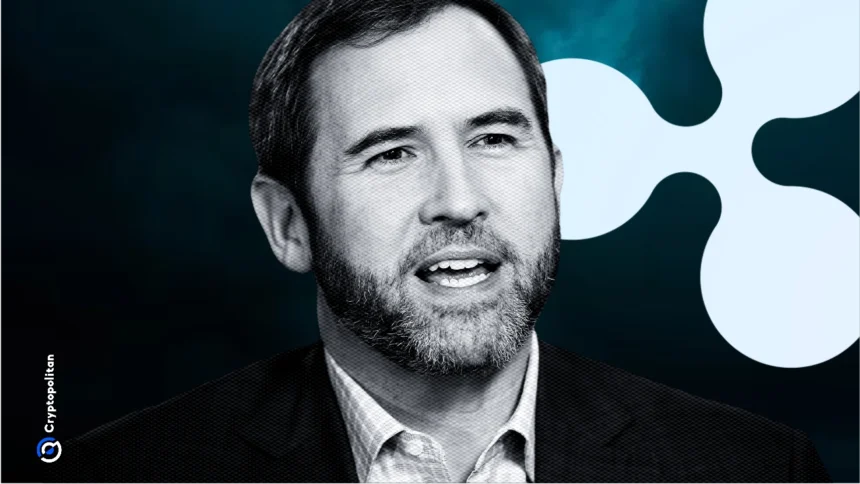
Ripple is intensifying its efforts in the traditional finance sector, investing approximately $4 billion this year to acquire various financial infrastructure companies. This ambitious strategy aims to integrate cryptocurrency technology with conventional banking systems, as shared by CEO Brad Garlinghouse in a recent interview at the Swell 2025 conference in New York.
Garlinghouse emphasized the importance of these investments, stating, “I want to see Ripple invest in [the] future and get ahead of where that market’s going.” The company’s strategy focuses on implementing crypto solutions in the very systems that have historically excluded such technologies. “The assets we have been buying have been on the traditional finance side, so we can bring crypto-enabled solutions to that traditional financial world,” he noted.
Ripple’s long-term vision seeks to embed its blockchain technology, along with its native token XRP, into existing financial infrastructure that facilitates trillions of dollars in transactions daily.
Key acquisitions this year include a $1.3 billion purchase of Hidden Road, a prominent prime brokerage, and over $1 billion spent on acquiring GTreasury, a software provider utilized by banks and corporate clients. Recently, Ripple launched Ripple Prime, a brokerage tailored for U.S. institutions that offers access to over-the-counter crypto trading.
Additionally, Ripple secured $500 million in fresh funding this fall, bringing its total market valuation to around $40 billion. This surge in investment and market value coincides with a growing institutional interest in cryptocurrency, particularly as U.S. regulations become less stringent under the current administration. Notably, the Securities and Exchange Commission and the Commodities Futures Trading Commission have eased their regulatory stance since President Donald Trump was in office, allowing major financial institutions to explore cryptocurrency options more freely.
Major banks such as Bank of America and Citigroup are now examining the potential of stablecoins, with Citigroup announcing intentions to launch a complete custody service by 2026. Meanwhile, JPMorgan is moving forward with plans for a deposit token on Coinbase’s Base blockchain. This shift in approach reflects a notable change in the U.S. stance towards cryptocurrency, as highlighted by Garlinghouse: “The United States used to lean out on crypto, and now we’re leaning in, and I think people underestimate how big a shift that is.”
On another front, Ripple aims to license its XRP Ledger to financial institutions seeking to enter the cryptocurrency space. This technology, which facilitates fast and cost-effective transactions, could enhance the real-world utility of XRP and expand its network. However, despite the advancements in other cryptocurrencies like Bitcoin and Ether, XRP’s value has remained relatively stable in 2025. Garlinghouse suggested that meaningful partnerships could drive XRP’s growth but acknowledged that regulatory hurdles were impeding progress.
The crypto sector has been hopeful for the introduction of the Clarity Act, which would establish clearer regulations for cryptocurrency companies and their respective token holders. However, with the current U.S. government shutdown ongoing for six weeks, progress on such legislation has stalled. Garlinghouse remarked, “Until we have that [legal go-ahead], it’s gonna be hard. Banks are looking for and need that clarity for them to really lean in.”