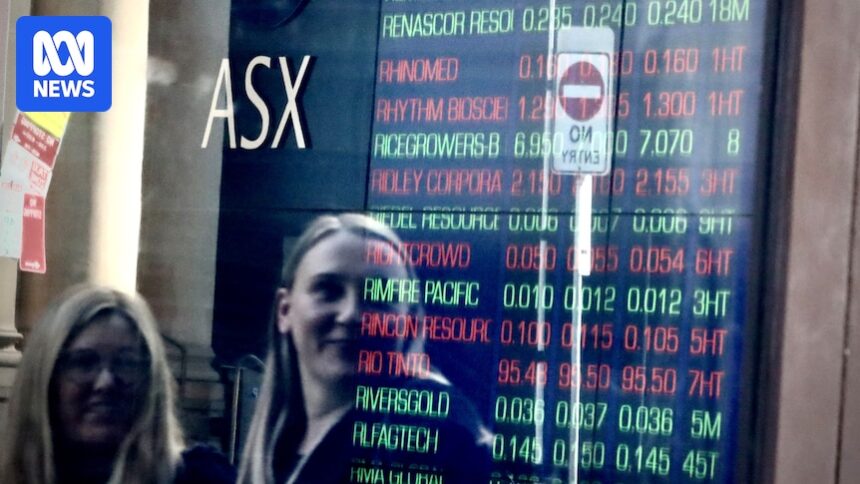
The Australian share market experienced a decline this morning, with the ASX 200 index down 0.6% to 8,443 points. In the context of global markets, the S&P 500 dipped by 0.3% to 6,606 points, while the Nasdaq saw a slightly smaller drop of 0.2%, settling at 22,090 points. European markets also faced significant downturns, with the FTSE shrinking by 2.4% to 10,064 points, and EuroStoxx dropping 2.3% to 597 points. Amidst these fluctuations, the Australian dollar remained flat at 70.84 US cents, and Brent crude oil fell by 2.6%, trading at $105.75 per barrel. Spot gold also experienced a minor decrease, down 0.1% to $4,653 per ounce, while Bitcoin witnessed a slight increase of 0.7%, priced around $70,395.
Market analysts have flagged rising risks of physical fuel and food shortages in the Asia-Pacific region, following escalating conflicts in the Middle East. A recent report from BMI highlighted the aftermath of an Iranian attack on the Ras Laffan LNG facilities, which was a retaliation for prior attacks on Iranian interests. The report indicates that even if conflict reduces, the risk of energy and fertilizer shortages could severely impact food supplies by late 2026 or early 2027.
Westpac’s latest economic assessment suggests a GDP growth of approximately 0.6% for the first quarter of 2026, bringing the annual growth forecast to 2.8%. The bank pointed out a stall in activity indicators, signaling a gradual easing likely welcomed by the Reserve Bank of Australia (RBA) as it approaches trend growth figures.
Attention is focused on potential disruptions from the Houthi movement, as RBC’s Helima Croft noted that their involvement could significantly impact oil supply routes. Currently, Saudi exports from its west coast remain steady. However, if the Houthis decide to engage actively in the conflict, this could heighten risks around Red Sea exports and escalate oil prices.
RBC also provided insights into the Draft Default Market Offer (DMO), which sets a regulatory maximum price for electricity in certain Australian regions. The bank views the DMO as a negative for major energy companies, such as AGL and Origin Energy, particularly as wholesale electricity prices have decreased.
On the corporate side, shares of heavy mining companies fell sharply due to weaker commodity prices, dragging the index lower. Aloca Corp saw a significant decline of 8.6%, with other gold miners and rare earth companies also suffering losses. However, defensive sectors such as healthcare and utilities reported modest gains.
Premier Investments stood out positively, with shares surging following an earnings report that exceeded estimates, despite facing a slight decline in overall sales. The company announced plans to revive its underperforming Smiggle brand through strategic repositioning.
Amid these developments, discussions around RBA interest rates intensified as analysts indicated that more hikes could be on the way as global conditions prompt a recalibrating of expectations. Tensions in markets were evident as traders digested significant fluctuations from previous sessions, underscoring a volatile period influenced by geopolitical events and economic forecasts.