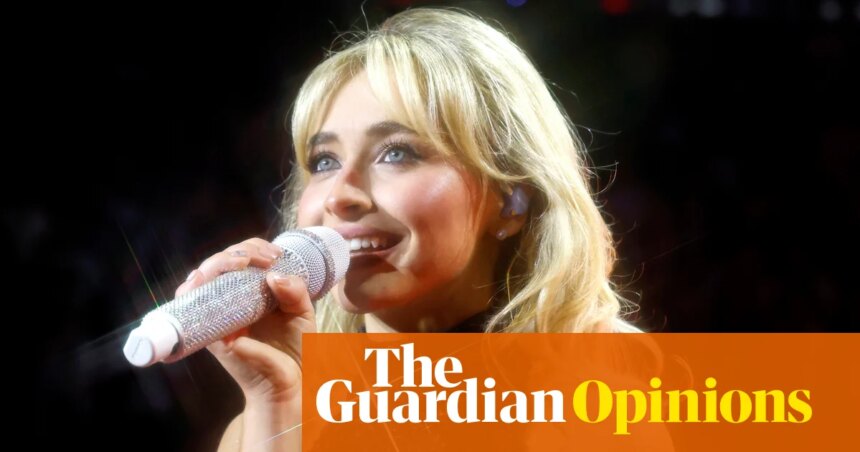
Last week, the Trump administration found itself embroiled in controversy over unauthorized military operations near Venezuela, amid a series of ongoing crises. Within this tumultuous context, a Department of Homeland Security employee sparked outrage with content posted on the official X account. The post featured a video that portrayed agents from Immigration Customs and Enforcement (ICE) apprehending undocumented immigrants, celebrating what was framed as a patriotic victory. This provocative content borrowed from popular culture, overlaying clips of aggressive arrests with lyrics from Sabrina Carpenter’s song “Juno,” which alluded to intimate moments in a way that many found jarring.
As a prominent pop artist, Carpenter faced a dilemma: to remain silent like her friend and collaborator Taylor Swift, who previously did not respond when the White House misused her music for promotional purposes, or to engage with the narrative and risk amplifying the administration’s propaganda. Carpenter chose to voice her objection, stating, “this video is evil and disgusting,” and insisted that her music should not be exploited to further the administration’s cruel agendas. While her response resonated with many, it inadvertently drew more attention to the original video, effectively feeding into the administration’s tactics.
The White House quickly responded, dismissing Carpenter’s criticisms and reiterating its narrative around ICE operations. They stated, “We won’t apologize for deporting dangerous criminal illegal murderers,” positioning anyone who disagreed as complicit in defending “sick monsters,” despite evidence that most individuals apprehended by ICE have not been charged with any crime.
The cycle of pop music being appropriated for political propaganda has accelerated, particularly under the current administration. Numerous artists, including Olivia Rodrigo and Jess Glynne, have publicly expressed their discontent over the use of their music in political contexts, with SZA commenting on the phenomenon as “PEAK DARK,” highlighting the inhumanity and manipulative nature of the tactic.
This administration, characterized by its social media presence and engagement strategies, operates with a clear focus on maximizing attention and outrage. Rather than engaging in thoughtful dialogue, it employs shock tactics that capitalize on the sensationalism so common in today’s media landscape. A White House official, acknowledging the deliberate strategy, remarked that they curated content to provoke reactions from media outlets, effectively playing the game of public engagement.
For musicians navigating this landscape, the challenge is significant. While disengagement might seem an appealing option, there is merit in confronting the narratives head-on. Younger artists, particularly those with engaged online followings like Carpenter, have the potential to address the administration’s narratives around fear and violence in a more proactive manner. Rather than reacting defensively, artists could adopt an approach that turns the spotlight back on the administration’s inhumane policies.
As noted by a communication team member from the White House, “The arrests will continue. The memes will continue.” Amid this troubling backdrop, artists may reconsider their responses, focusing less on outrage and more on strategic engagement to counteract the normalization of cruelty and xenophobia. The situation underscores a broader culture of media manipulation, underscoring the necessity for artists to remain vigilant and proactive in their messaging, recognizing the game for what it is—a relentless cycle of exploitation and provocation.