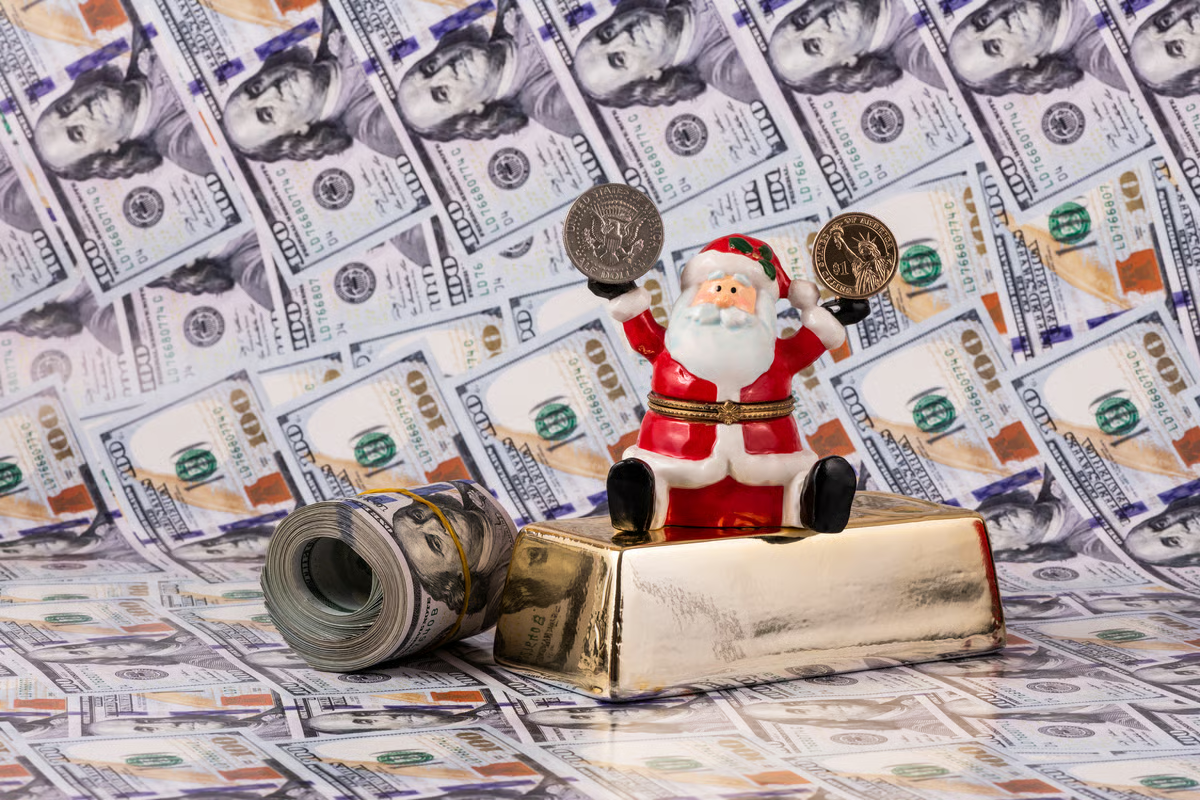
During the final trading days of December and the early days of January, a historical trend known as the “Santa Claus rally” often sees the stock market experience a notable surge. Historically, this phenomenon has played out 80% of the time, yielding an average return of 1.3%. As of Christmas Eve, signs suggest that this year’s rally may be underway, with all major indexes registering gains on December 24th.
The implications of a Santa Claus rally can be significant. Typically, its occurrence serves as a positive signal for the upcoming year, indicating a potential for gains. Since 1926, the stock market has recorded a positive annual performance approximately 70% of the time. Notably, the absence of a Santa Claus rally has been historically associated with negative or below-average returns in the subsequent year; in six instances since the mid-20th century, five of those years experienced downturns.
However, it is important to approach the idea of a Santa Claus rally with caution. While an initial rally can be reassuring, it does not guarantee a seamless year ahead. A stark example is the market behavior following the Santa Claus rally at the end of 2021, which was followed by significant declines for the S&P 500 and Nasdaq by the end of the following year.
Looking forward to 2026, market analysts express concerns about the current valuation levels, particularly regarding the S&P 500, which is set to open the year at a price-to-earnings (P/E) ratio of about 30—significantly above the historical average of 20. While some market bulls argue that the shift towards asset-light technology has justified higher valuations over the past two decades, others remain wary. Historical data show that midterm election years, such as 2026, often present challenges, coupled with uncertainties surrounding inflation and interest rate policies due to the potential appointment of a new Federal Reserve Chairman.
Investors are encouraged to monitor foundational variables such as earnings growth, market valuations, and inflation trends. Rather than making impulsive decisions based on short-term market movements, a disciplined, long-term investment strategy—focused on accumulating shares of quality companies—remains a prudent approach through varying market conditions. As the market heads into 2026, maintaining this perspective will be vital for weathering potential challenges, even amidst holiday market trends like the Santa Claus rally.