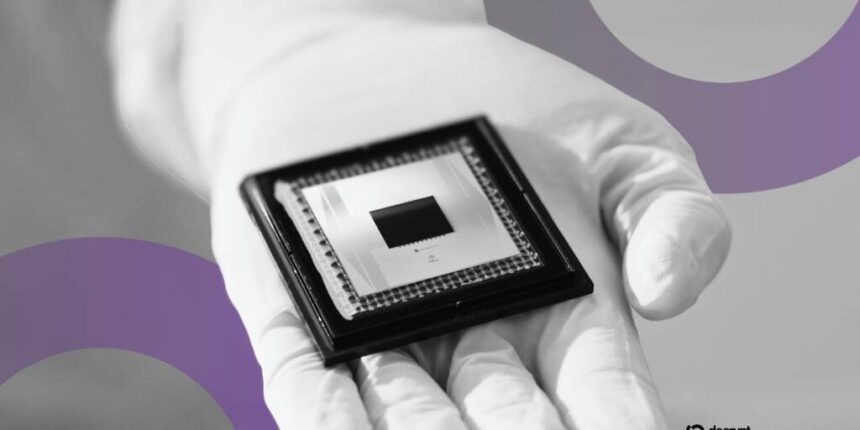
Saudi Arabia has made a significant advancement in technology by installing the Kingdom’s first quantum computer, developed by the France-based firm Pasqal. This installation not only highlights Saudi Arabia’s ambitions in the field of quantum computing but also represents a critical milestone in the ongoing global race in this cutting-edge technology. The newly installed 200-qubit system at Aramco’s data center in Dhahran is poised for various industrial applications, including energy modeling and materials research.
Pasqal has characterized this new quantum computer as its most powerful offering to date. A qubit, the fundamental unit of a quantum computer, serves as the backbone for its computational capabilities. Loïc Henriet, the CEO of Pasqal, expressed pride in this development, emphasizing its historical significance for the Middle East’s emerging quantum landscape.
This initiative positions Saudi Arabia among other global powers that have invested in quantum technology, including the United States, China, the European Union, the United Kingdom, Japan, India, and Canada. These countries are leveraging national quantum programs to enhance research infrastructure and cultivate a skilled workforce necessary for developing future robust quantum systems.
However, experts caution that while current quantum machines are unable to breach Bitcoin’s cryptography, advancements could pose a substantial risk in the future. Yoon Auh, founder of Bolts Technologies, noted that the swift pace of development in quantum computing has compelled security experts to consider the possibilities seriously. He remarked on the inevitability of breakthroughs in this arena, acknowledging that while today’s machines cannot break encryption methods like ECC or RSA, the progress is consistent.
The motivations for nation-states to invest in quantum computing extend beyond merely decrypting existing systems. Auh highlighted that this technology presents the potential to become a global digital weapon independent of any particular political system.
Current challenges persist, as noted by research scientist Ian MacCormack, who explained that a 200-qubit system is relatively modest. Practical limitations such as noise interference and short coherence times restrict the number of operations that can be performed. Although the system can facilitate interesting experiments, it lacks the capacity for error-corrected computing necessary to execute complex algorithms, such as Shor’s Algorithm, which can factor integers and threaten current cryptographic systems.
Recently, researchers at Caltech introduced a significantly larger neutral-atom system with 6,000 qubits, yet, like other advanced machines, it primarily serves research and algorithm development rather than actual cryptographic breaches. The effectiveness of a quantum computer in threatening existing encryption lies in its coherence time; longer coherence times would enable more operational efficiency.
The introduction of the Pasqal system has reignited discussions about the so-called “Q-Day,” the anticipated moment when a quantum computer’s capabilities could allow it to derive private keys from public keys and forge digital signatures. Such advancements would have ramifications not only for Bitcoin but for numerous security systems that underpin the global economy.
Justin Thaler, a research partner at Andreessen Horowitz and associate professor at Georgetown University, identified the potential threat adequately, emphasizing that someone with a capable quantum computer could access and authorize transactions without the account holder’s consent.
Nonetheless, both early-stage systems like Pasqal’s and Google’s 105-qubit Willow chip remain significantly behind the threshold needed to execute such attacks. Christopher Peikert, a professor of computer science and engineering at the University of Michigan, underscored the current technological limitations, suggesting that while there is a reasonable probability that quantum computing could pose existential threats to cryptocurrencies like Bitcoin in the long term, it remains a distant concern for the immediate years ahead.