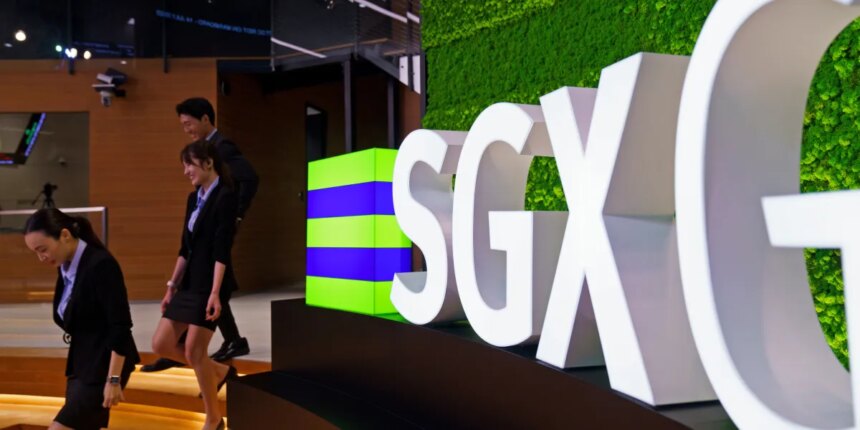
Firms are on the brink of a historic opportunity to establish dual listings in both the United States and Singapore, thanks to a pioneering partnership known as the SGX-NASDAQ dual listing bridge. Set to launch later this year, this initiative reflects Singapore’s aim to rejuvenate its stock exchange, which has struggled to compete with regional giants like the Hong Kong Stock Exchange (HKEX) in attracting initial public offerings (IPOs) and other capital market transactions.
This new listing bridge is expected to attract Southeast Asian companies looking to leverage the extensive capital market in the U.S. while maintaining a foothold in the Southeast Asian region, where they have strong brand recognition. Chan Yew Kiang, the ASEAN IPO leader at accounting firm EY, emphasized the dual benefits this arrangement presents to companies in the region.
Additionally, Tay Hwee Ling, capital service markets leader at Deloitte Southeast Asia, noted that the opportunity could extend beyond Southeast Asian companies. U.S. firms might also find value in this partnership, allowing them to extend their trading hours past the close of U.S. markets and deepen their presence within Southeast Asia.
Clifford Lee, global head of banking at DBS, highlighted that the initiative provides Asian investors with a broader scope for diversification, particularly amid ongoing geopolitical uncertainties. An SGX spokesperson affirmed that the Global Listing Board would enable firms to capitalize on the strengths of both markets, showcasing the U.S.’s depth alongside Asia’s growth prospects in a streamlined manner.
Singapore’s stock exchange has historically grappled with low liquidity, with an average daily turnover of around $1.4 billion, starkly lower than HKEX’s $29 billion. Research manager Glenn Thum from Philips Securities attributes this disparity to the active retail trading base in China and Hong Kong, which supports high daily transaction volumes. He noted that Singapore’s investor base tends to be smaller and more conservative, favoring dividends and bonds over the speculative trading that characterizes its larger neighbors.
Hong Kong enjoys a consistent influx of Chinese companies seeking global investors, presenting a competitive edge for the HKEX. Chan’s observations regarding the depth of the local investor base in mainland China further underline the disparities between these exchanges.
Despite the advantages offered by U.S. capital markets, several Southeast Asian companies, including ride-hailing giant Grab and e-commerce leader Sea, have opted for U.S. listings. Recently, the Filipino food conglomerate Jollibee Foods Corporation announced plans to list its international business on a U.S. exchange by 2027.
Nevertheless, Singapore’s market indicators are beginning to show promise. In 2025, the SGX’s IPO proceeds reached their highest level since 2019, positioning it as a leader in Southeast Asia’s IPO market. December data indicated a significant year-on-year surge of 29% in the turnover value of securities traded on the SGX.
However, the scale of Singapore’s IPOs remains considerably smaller compared to those in Hong Kong. Singapore’s largest IPO, NTT DC REIT, raised $773 million, whereas CATL’s secondary listing in Hong Kong garnered over $5 billion.
Despite the exciting potential of the dual listing bridge, experts like Thum caution against viewing it as a comprehensive solution to Singapore’s liquidity challenges. A critical factor will be whether U.S. investors actively engage during Singapore’s trading hours.
Moreover, the dual listing bridge stipulates that only firms with a market capitalization exceeding 2 billion Singapore dollars (approximately $1.6 billion) are eligible, limiting the number of Southeast Asian businesses that can participate. For context, QAF Limited, a renowned Singaporean food conglomerate, has a market capitalization of around $546 million, disqualifying it from applying for a dual listing on Nasdaq, while the HKEX maintains a significantly lower threshold of approximately $385 million for secondary listings.