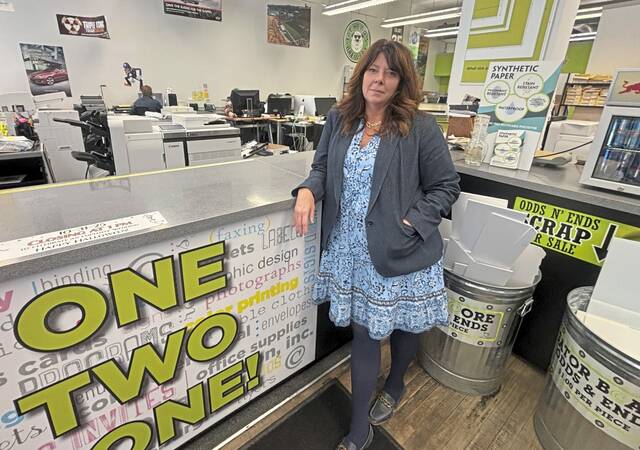
In Pittsburgh’s South Side, Rebecca Kasavich, the owner of Copies at Carson, continues to grapple with the challenge of funding health insurance for her employees. After being in the commercial printing business for over 15 years, she made the tough decision to have her staff contribute to their health plans—a move reflective of many businesses struggling with rising healthcare costs.
Despite her attempts to manage these expenses, the financial burden has escalated. In 2020, Kasavich adopted a high-deductible insurance model that offered significant savings but required her to reimburse employees for certain costs. Unfortunately, even this adjusted system feels increasingly unstable. With annual insurance costs rising approximately 20%, Kasavich is bracing for similar increases when she reviews plans for 2026.
Kasavich explained that while her business has historically absorbed some healthcare costs, the continuing rise compels her to seek alternative solutions. The trend is alarming; recent findings from the health policy organization KFF indicate that employer-sponsored health insurance prices have risen by 6% compared to last year, following even steeper 7% increases in the two previous years. The average family plan is nearing $27,000.
The implications of this escalation are particularly burdensome for small businesses. Rich Longo, director of Duquesne University’s Small Business Development Center, highlighted that securing health insurance remains a top concern for many small enterprises. As the Avon Design Group in McCandless faces an 11% rise in premiums this year, Business Manager Karen Avon noted that further increases may force the firm to reconsider future pay raises for employees.
Whereas Copies at Carson has gone beyond simple employee contributions, many businesses are choosing to eliminate health benefits altogether. Kimberly Hrubes, president of Greater Pittsburgh Insurance Consultants, reported that some employers are opting to boost salaries instead, allowing employees to purchase their own insurance. This trend is indicative of a broader shift where classic employer-backed insurance is becoming less feasible.
Traditional insurance plans require fixed monthly premiums, and as costs climb, many workers find themselves paying more for coverage. Options to mitigate these costs include requiring employee contributions or selecting more limited provider networks. A recent Mercer survey found that 59% of employers plan to make cost-cutting adjustments to their health insurance offerings by 2026.
Kasavich’s approach to insurance combines a low premium and high deductible with a health reimbursement account, representing a gamble in her effort to provide adequate coverage while managing expenses. If employees require only routine care, costs may remain manageable, but significant medical issues could result in substantial financial repercussions for her business. Stop-loss coverage exists to mitigate some of this risk, but many employers are increasingly fleeing to Individual Coverage Health Reimbursement Arrangements (ICHRAs). These arrangements, approved by federal regulators in 2020, allow employers to provide fixed amounts to employees for purchasing their insurance.
Experts suggest that regions like Pittsburgh are particularly well-suited for ICHRAs due to competitive pricing on the individual insurance market. By shifting the responsibility for insurance onto employees, businesses aim to eliminate the unpredictability of potentially high medical costs.
The situation raises concerns about an impending crisis. Jonathan Greer, president of the Insurance Federation of Pennsylvania, warned of a potential “actuarial death spiral.” Rising premiums could lead more individuals to opt out of insurance, resulting in a higher concentration of sick individuals and, subsequently, higher rates.
Industry representatives, including Emily Mashore of Highmark, attribute rising costs to factors such as expensive care and high usage rates, complicated by expiring government subsidies.
While group health insurance remains a staple for large companies, accounting for 98% of employees, its accessibility is dwindling for smaller firms. Advocates like Longo suggest that innovative solutions, such as shared health plans among similar businesses, could better support small enterprises, although current regulations in Pennsylvania hinder such arrangements.
As these discussions unfold, experts agree that merely modifying how coverage is provided will not resolve the core issue of rising healthcare costs. The journey toward sustainable health insurance solutions for small businesses remains fraught with uncertainty, as stakeholders explore options that may offer temporary relief but not a long-term resolution to an ingrained problem.