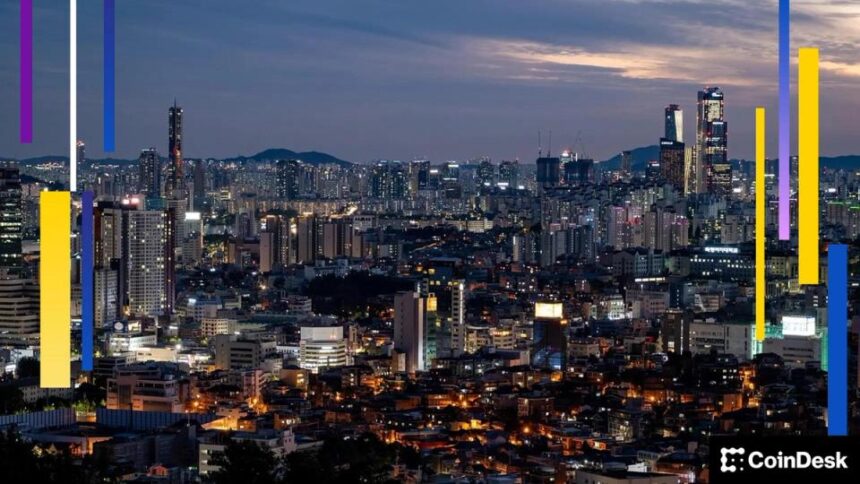
South Korea’s stock market experienced a significant downturn this week, marked by one of the steepest declines in its history. The Kospi index plummeted nearly 20% within just two trading days, a dramatic shift precipitated by mounting geopolitical tensions that have disrupted what some analysts describe as a speculative bubble surrounding popular artificial intelligence-related stocks.
This rapid downturn comes on the heels of a robust rally that had propelled the Kospi—a stock market index heavily influenced by tech giants like Samsung and SK Hynix—upward by almost 180% over a span of ten months. The sudden shift raises questions about the sustainability of the previous market dynamics, particularly given the aggressive buying behavior exhibited by retail investors during that time.
The timing of this decline has also reignited interest in South Korea’s cryptocurrency markets, where trading volumes have begun to rise once more. Notably, the country’s retail investors play a significant role in both stock and digital asset markets, often moving capital between speculative investments rather than withdrawing from risk altogether. Such behaviors were highlighted in a CoinDesk analysis from November, which referred to the phenomenon as the “Great Korean Pivot.” At that time, trading volumes on local crypto exchanges had plummeted as retail investors shifted their focus to AI-linked technology stocks.
As the equity rally falters, a portion of South Korean traders appears to be redirecting their attention back to cryptocurrencies. Bitcoin has seen its price surge by 7% over the past 24 hours, climbing to exceed $73,000. Other cryptocurrencies, including Ether (ETH), Solana (SOL), and XRP, have also posted similar gains, indicating a broader uptick across digital assets.
Despite the resurgence in crypto trading volumes, current activity levels have not reached the euphoric and speculative highs observed during previous cycles in the Korean market. A crucial indicator of this sentiment is the Kimchi premium, which looks at the difference between Bitcoin prices on local exchanges versus global markets. When demand in South Korea spikes, Bitcoin often trades at a significant premium against other currencies. However, the current Kimchi premium remains relatively modest, hovering near 1%, according to data from CryptoQuant. This figure is considerably lower than the heightened premiums seen during previous retail-driven market surges, although a slight improvement has been noted since the premium dipped into negative territory earlier this year.
While retail sentiment is showing early signs of positivity, the market remains cautious, reflecting the complexity of investor behavior amid shifting economic landscapes and external pressures.