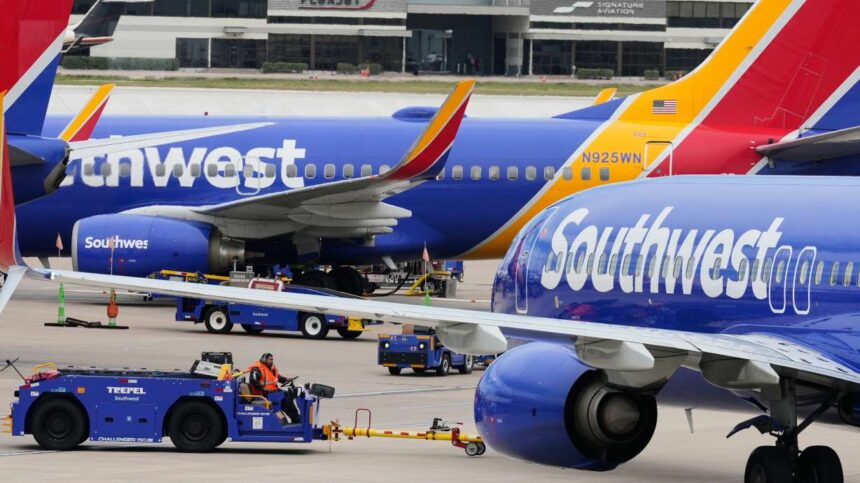
Travelers will soon encounter stricter regulations regarding the number of portable chargers they can carry during flights, following increasing concerns about lithium battery fires on airplanes. Starting April 20, Southwest Airlines will implement a new rule limiting passengers to only one portable charger on board. Furthermore, these chargers are prohibited from being stored in overhead bins or checked luggage. As part of current safety measures, passengers are already required to keep their chargers visible while in use, allowing flight attendants to respond swiftly should any device begin to overheat.
This new policy goes further than the recent recommendation made by the International Civil Aviation Organization, which suggested that passengers be allowed to carry two chargers. However, Southwest has indicated that enforcement will not include aggressive bag checks or charger confiscations. Dave Hunt, Southwest’s Vice President of Safety and Security, emphasized that the airline will focus on educating travelers about this new regulation during the booking process and upon their arrival at the airport, highlighting the potential risks associated with portable chargers.
Awareness of these hazards is crucial, according to Jeff Marootian, CEO of UL Standards & Engagement, the organization responsible for setting safety guidelines for electronic device manufacturers. Marootian noted a significant increase in battery-related incidents correlating with the growing use of rechargeable devices, such as smartphones, laptops, and portable chargers. The Federal Aviation Administration (FAA) has reported a yearly rise in lithium battery incidents, reaching 97 cases in 2025, as travelers carry more electronic devices. Marootian mentioned that approximately two incidents involving portable chargers are reported each week, with a notable 42% increase in such incidents over the past year.
One alarming case occurred in January 2025 when a fire on an Air Busan flight, which was preparing for takeoff in South Korea, necessitated the evacuation of all 176 passengers as flames broke through the aircraft’s ceiling. Flight attendants on such flights are equipped with fire-resistant bags and insulated gloves to manage overheating devices and prevent potential fires from escalating.
Southwest Airlines believes the new regulation will strengthen their efforts to minimize risks associated with lithium battery-related incidents. To facilitate compliance, the airline is also planning to enhance its fleet with in-seat power options by the middle of next year.
Aviation safety expert Steve Arroyo, who spent 37 years flying with United Airlines, supports Southwest’s initiative, asserting that even though the frequency of battery-related fires is low compared to the approximately 100,000 daily flights worldwide, the catastrophic outcomes of such fires can escalate very quickly. The focus on reducing risks associated with portable chargers represents a crucial step in maintaining aviation safety as the use of electronic devices continues to grow among travelers.