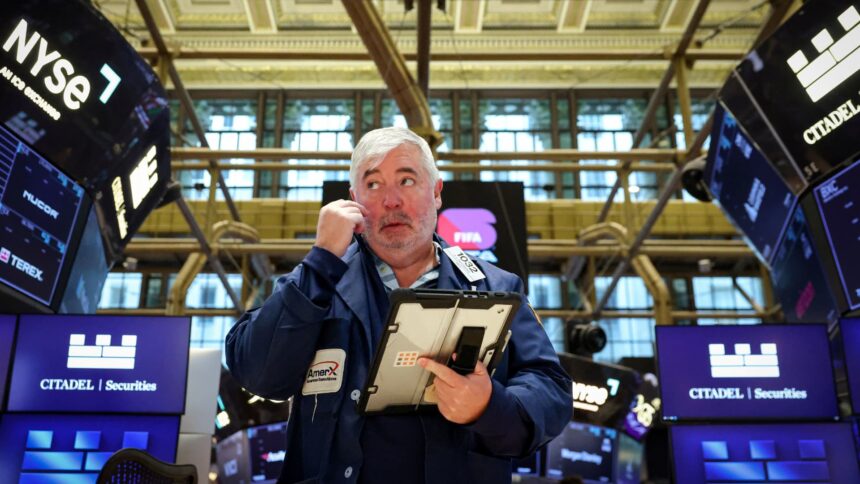
Traders on the floor of the New York Stock Exchange reacted to growing geopolitical tensions as S&P 500 futures dipped on Monday night, reflecting concerns over the ongoing conflict between the U.S. and Iran. The S&P 500 futures fell by 0.54%, with Nasdaq 100 futures declining by 0.67%. Futures linked to the Dow Jones Industrial Average saw a drop of 244 points, representing a nearly 0.5% decrease.
In the previous session, the S&P 500 and Nasdaq Composite had managed to bounce back, closing in positive territory despite earlier losses. The S&P 500 ended just above the flatline, while the tech-heavy Nasdaq experienced a rise of nearly 0.4%. The Dow, however, experienced a loss of 73 points, or 0.15%, after dropping nearly 600 points earlier in the day. This volatile trading session indicates that investors are weighing their options amid fears that the escalating conflict could significantly impact market conditions.
Several defense and energy companies benefitted from the emerging tensions. Notable performers included Northrop Grumman and Palantir, which saw their stock prices increase by 6% and 5.8%, respectively. Furthermore, a bounce back in technology stocks was aided by a roughly 3% uptick in Nvidia’s shares.
Analysts suggest that historical market trends may indicate that geopolitical crises can lead to short-term volatility but are often resolved in the longer term. Carson Group chief market strategist Ryan Detrick noted that the market has likely been pricing in the potential for conflict over the past month, which could mitigate the extent of any further declines and allow for a quicker recovery should a path to resolution emerge.
Adding to the market’s concerns, global crude oil prices surged as worries intensified over the possibility that the U.S.-Iran conflict could disrupt vital oil infrastructure. An Iranian Revolutionary Guard commander announced that the Strait of Hormuz, a crucial transit route for crude oil, had been closed, with threats made against ships attempting to navigate the area. This situation poses additional inflationary risks as fuel prices may rise.
The conflict has recently escalated following joint U.S.-Israeli military strikes that resulted in the death of Iranian Supreme Leader Ayatollah Ali Khamenei over the weekend. U.S. military officials confirmed that additional forces are being deployed to the region, while President Donald Trump indicated that the conflict could last four to five weeks, with the potential to extend even longer.
As traders look forward to Tuesday, they are keeping a close eye on upcoming earnings reports from key companies, including cybersecurity firm CrowdStrike and retailer Target. Significant quarterly results from chipmaker Broadcom and warehouse giant Costco are also anticipated later in the week, adding another layer of complexity to the current market landscape.