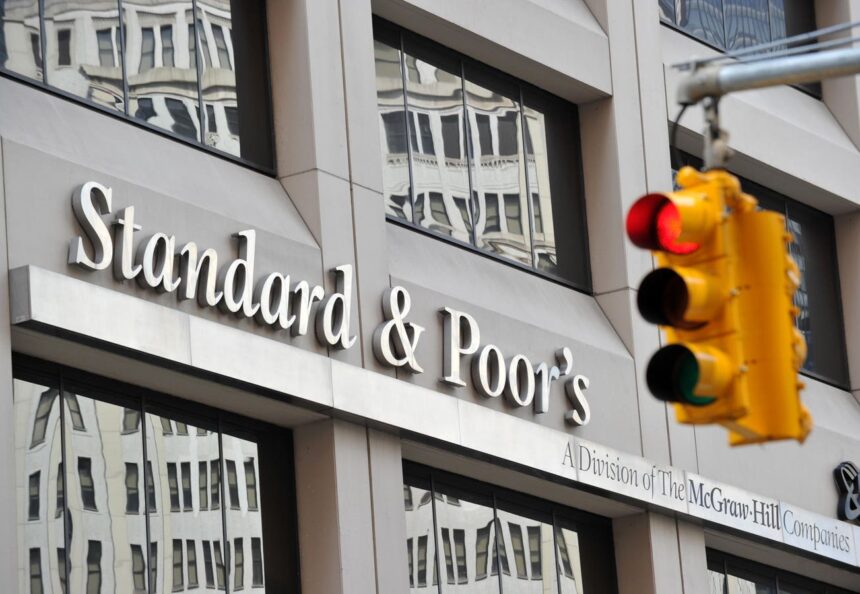
In a significant move reflecting the evolving landscape of decentralized finance (DeFi), S&P Global Ratings has assigned a credit rating to Sky Protocol, which oversees USDS, the fourth-largest stablecoin in circulation. This marks a historic milestone as it is the first time a conventional credit agency has formally evaluated a decentralized protocol. The rating holds a speculative-grade “B-” with a Stable outlook, a classification typically reserved for high-risk corporate debt.
This unprecedented assessment indicates that traditional finance is entering the DeFi space, albeit with a cautious and critical approach. S&P’s evaluation effectively exposes vulnerabilities within Sky Protocol while acknowledging its systemic importance in the DeFi ecosystem.
At the core of S&P’s rating methodology lies its mandate to determine the likelihood of full and timely repayment of liabilities. In Sky’s scenario, these liabilities pertain to its stablecoins. The rating underscores potential risks surrounding Sky’s ability to maintain the stability of its tokens and fulfill redemptions effectively.
Rather than conforming Sky Protocol to a banking framework, S&P tailored its existing models for non-bank financial institutions, applying key principles relevant to DeFi. The criteria for assessment focused on five primary pillars: Capital Adequacy and Earnings, Liquidity and Funding, Asset Quality, Governance and Control, and Regulation and Legal Frameworks.
S&P’s analysis employs the Basel framework commonly used to assess banks. This framework mandates that banks maintain capital equal to at least 8% of their risk-weighted assets (RWA), with different weights assigned to various asset types depending on their risk profiles. The treatment of crypto assets under Basel is particularly harsh, as they are often categorized into high-risk groups that could incur significant capital requirements.
Analyzing Sky’s balance sheet reveals a mix of strengths and weaknesses. The protocol maintains a diversified portfolio, with over half allocated to crypto-backed loans and a significant portion in USDC, providing some measure of stability. However, an alarming factor is Sky’s exposure to USDe, a synthetic dollar asset that holds a staggering 1,250% risk weight under Basel criteria. This exposure could render the protocol vulnerable during times of market distress.
In interviews, DeFi Researcher Asher Aharonov highlighted that while Sky exhibits essential liquidity and a critical market position, it operates with a thinly capitalized structure. Its risk-adjusted capital ratio is a mere 0.4%, significantly below the industry standard for banks. Governance issues further complicate its operations, as a concentration of control among a few major stakeholders heightens the risk of instability. A failed governance attempt earlier this year underscored these vulnerabilities, suggesting that without reform, the protocol could be exposed to crises.
To strengthen its rating and enhance stability, S&P’s evaluation implies potential pathways for Sky Protocol. In the near term, reassessing its exposure to USDe and implementing a formal surplus policy could significantly ease capital requirements. From a longer-term perspective, Sky could benefit from gradually increasing its capital buffer and prioritizing retained earnings over buybacks, thereby enhancing resilience and investor confidence.
The implications of S&P’s rating extend beyond just Sky Protocol. It marks a crucial moment in the interplay between traditional finance and decentralized systems, setting a precedent for other protocols within the DeFi realm. As institutions in the financial sector navigate risk benchmarks, ratings like this may serve as gateways for their engagement in DeFi.
This dynamic poses a conundrum: while DeFi emphasizes capital efficiency, gaining mainstream acceptance necessitates the establishment of conservative buffers and predictable governance structures. Sky Protocol embodies this tension, illustrating how a platform can be both systemically vital yet fundamentally fragile.
Ultimately, S&P’s credit rating of Sky Protocol serves as both recognition of the advancements made within DeFi and as a warning highlighting the journey ahead in fortifying capital structures and governance frameworks. As Wall Street continues to scrutinize DeFi, the future landscape will depend on how protocols like Sky adapt to these emerging evaluations and the demands of traditional finance.