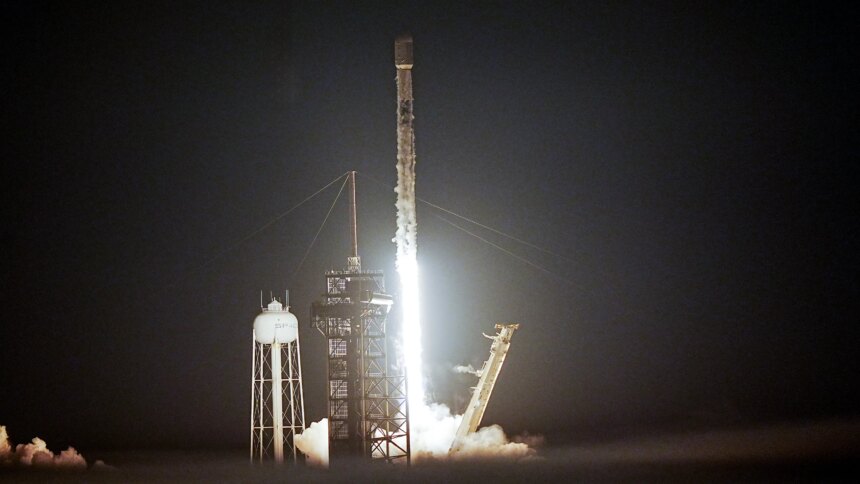
In a significant milestone for SpaceX, the Falcon 9 first-stage booster successfully landed aboard the drone ship “A Shortfall of Gravitas” in the Atlantic Ocean following its ninth mission. The launch, which took place at Cape Canaveral Space Force Station, involved the deployment of 29 Starlink satellites as part of SpaceX’s ongoing effort to expand internet access globally.
The countdown for the launch proceeded smoothly, with liftoff occurring at precisely 12:25 a.m. ET. Just minutes before the launch, fueling procedures were underway, marked by the presence of a frost ring on the rocket’s exterior, indicating that the countdown was firmly on track. The Falcon 9’s engine chill began at T-minus 7 minutes, followed by the command to begin final prelaunch checks a minute later.
This mission not only showcased SpaceX’s continued advancements in rocket technology but also further solidified the Falcon 9 booster’s impressive track record, with prior missions that included launches for the National Reconnaissance Office, NASA resupply missions, and various Starlink deployments.
Post-launch, the booster stage successfully executed its separation and began its descent back to Earth. Approximately eight minutes after liftoff, it touched down on the drone ship stationed in the Atlantic, achieving a remarkable ninth flight. This reuse of rocket components is central to SpaceX’s operational model, aimed at reducing the cost of space access.
Before the launch, forecasts had indicated challenging weather conditions with strong winds affecting the Cape. The area experienced gusts of up to 25 mph, prompting various advisories and warnings from the National Weather Service. Despite initial delays and concerns over the wind, SpaceX managed to secure a successful launch.
This event marks the 107th orbital rocket launch of 2025 from the Space Coast, underscoring SpaceX’s dominance in the launch market. The company continues to lead the world in the number of spacecraft launched, having deployed a significant majority in recent quarters compared to other global competitors.
As SpaceX moves forward with its mission, it has announced plans for further Starlink missions, including one scheduled for later in the week. This relentless push for innovation and operational excellence ensures that the company remains at the forefront of the aerospace industry, continually expanding its capabilities and services in space exploration and satellite communications.