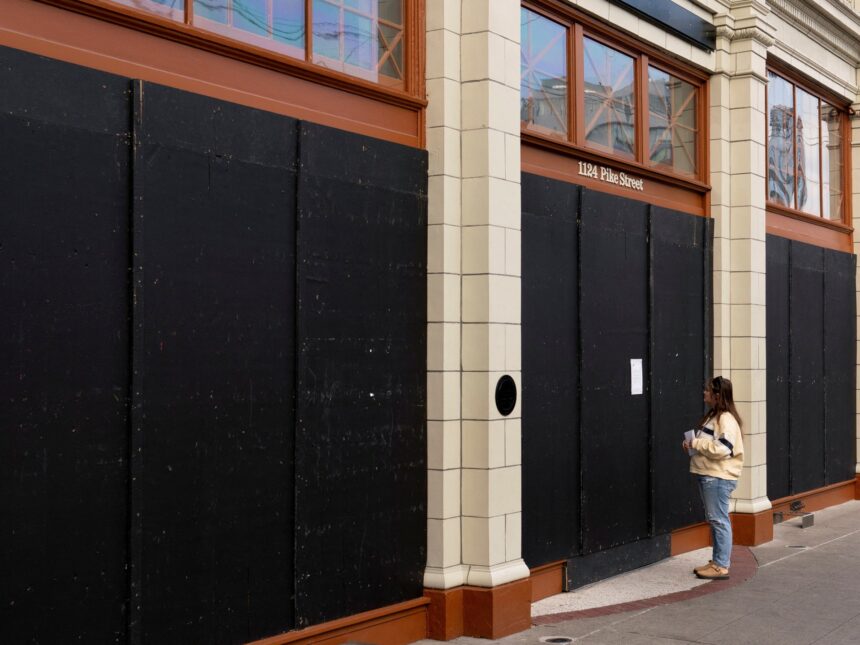
Starbucks has announced plans to close several underperforming stores across North America as part of a major restructuring initiative led by CEO Brian Niccol. This effort aims to address the company’s declining sales, which have dropped for six consecutive quarters in the U.S. The closures, revealed on Thursday, are part of a broader strategy projected to cost $1 billion by the end of the 2025 fiscal year.
As a result of this restructuring, the total number of Starbucks locations in the U.S. and Canada is expected to decrease by approximately 1 percent, translating to several hundred store closures, including the notable Seattle roastery. This decision is seen as a move to restore the “coffeehouse” experience and lure customers back to the brand’s outlets.
The closures will impact around 900 workers, adding to the 1,100 corporate positions eliminated earlier this year. Critics have drawn attention to the significant disparity between Niccol’s compensation and that of the average Starbucks barista, highlighting that Niccol earned a staggering $95.8 million last year—6,666 times more than a typical barista, marking the largest CEO-to-worker pay gap within the S&P 500, according to the Institute for Policy Studies.
Among the stores being closed is Starbucks’s flagship unionized location in Seattle, which features a substantial in-house roastery. This store has been at the center of negotiations between Starbucks and the Workers United union, representing more than 12,000 baristas. Although discussions began in April, progress has stalled. In December, some union members participated in strike actions during the busy holiday season, and recently, baristas at the Seattle location organized a picket over ongoing contract disputes.
Furthermore, a unionized store on Ridge Avenue in Chicago was also confirmed for closure, with workers already engaged in picketing activities. Baristas participating in the protests from various local outlets emphasized their essential role in drawing customers to the stores, insisting that their voices need to be acknowledged by the company.
In response to the closures, Starbucks Workers United criticized the situation, asserting that the need for union representation for baristas has never been clearer. The union expressed intentions to negotiate on behalf of the affected employees to facilitate their transition to other locations.
Analysts from TD Cowen estimate that around 500 company-owned stores in North America will be impacted by these changes, which Niccol addressed in a letter to employees. The CEO stated that the company has identified locations where it cannot maintain the expected physical environment for customers or achieve financial viability.
In his efforts to rejuvenate the brand, Niccol is focusing on enhancing the customer experience by investing in store improvements, streamlining operations to reduce wait times, and minimizing management layers. These changes come amid increased consumer scrutiny regarding spending habits and intensified competition in the coffee market.
Starbucks is set to finish the fiscal year with nearly 18,300 total locations in North America, a decrease from 18,734 reported in July. As part of the ongoing restructuring, the company plans to improve staffing levels and leverage technology to optimize order processing, while also announcing a modest salary increase of 2 percent for all salaried employees in North America this year.
While Starbucks adjusts its operational strategy in an attempt to regain its footing in the market, the implications of these closures and workforce reductions continue to draw mixed responses from workers and stakeholders alike.