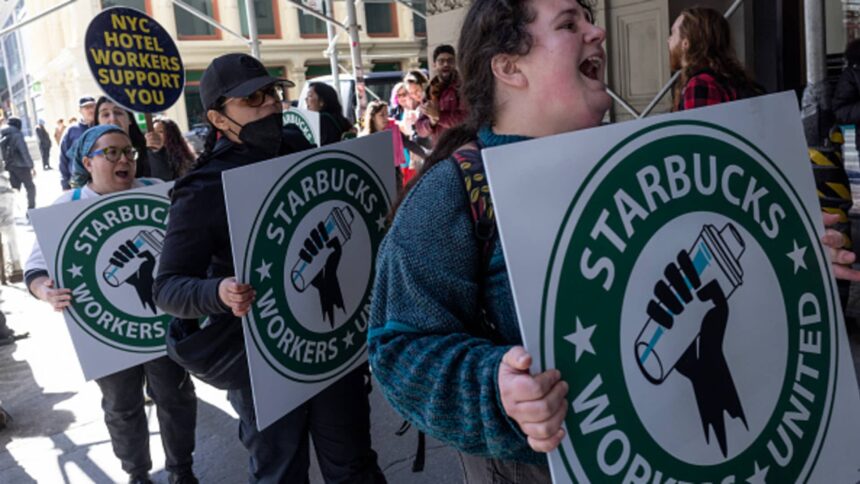
In New York City, union members representing Starbucks workers demonstrated outside a local branch on February 28, effectively closing the store as baristas participated in a walkout. The protest coincided with ongoing negotiations for a labor agreement aimed at solidifying workers’ rights within the coffee giant.
Starbucks Workers United unveiled a detailed proposed contract last month, seeking to create foundational protections for union members. The proposal outlines several key demands, including protections against discrimination, unjust firings, and measures related to temporary or permanent store closures.
Significantly, baristas have adjusted their expected starting wage to $17 per hour, previously sought at $20—still an increase over Starbucks’ current starting wage range of $15.25 to $16 per hour across 43 states. Additional proposals include annual raises of 4%, a grievance resolution process involving baristas, management, and union representatives, and an approved dress code by the union.
The union is pushing for a mandate ensuring at least three employees on the floor at all times, alongside enforceable staffing and safety protections. They are also advocating for existing employees to be given priority for open hours before any new hires are made, as well as the resolution of numerous outstanding unfair labor practice charges.
Despite the comprehensive nature of the proposals, Starbucks has yet to formally respond. However, the company’s spokesperson expressed interest in resuming negotiations with Workers United, suggesting a meeting be arranged on March 30, with continued discussions throughout April.
Workers United currently represents about 6% of Starbucks’ company-owned locations in the U.S. The negotiation process has proven tumultuous; the last formal discussions occurred in December 2024, and subsequent mediation efforts were unsuccessful when a proposed economic package was rejected by barista delegates.
The backdrop of this conflict includes a significant open-ended strike during the holiday season in over 40 cities, resulting in multiple temporary store closures during one of the busiest times for the company. While Starbucks reported that the strikes did not materially impact its business, the tensions with employees are set to come under further scrutiny during its upcoming annual shareholder meeting on March 25.
Investors led by the union-affiliated SOC Investment Group are urging shareholders to oppose the reelection of certain board directors, citing their responsibilities in relation to the company’s labor relations. Proxy advisory firm Glass Lewis has echoed these concerns regarding one such director, Beth Ford.
Amid these challenges, the ongoing tensions raise questions about Starbucks’ ability to successfully turn around its U.S. business, which recently experienced a growth in store traffic for the first time in two years. The company has acknowledged in its latest annual filing potential risks ahead, such as further work stoppages that could impact its reputation and brand.