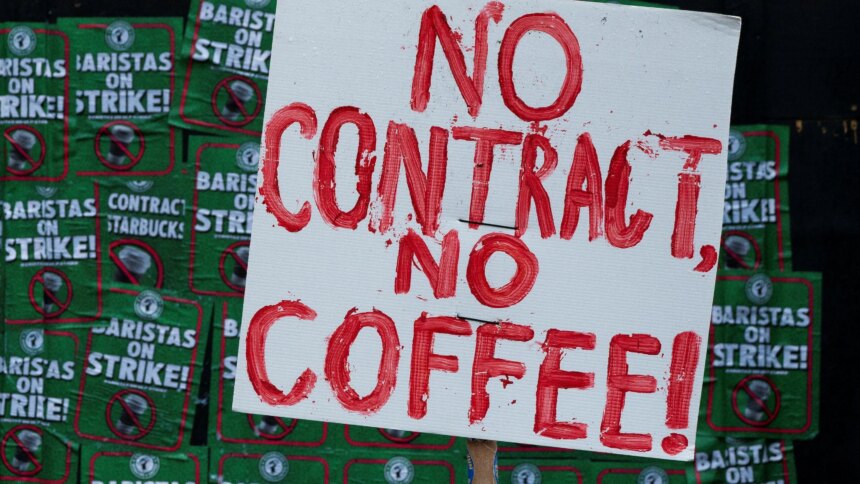
More than 1,000 Starbucks workers participated in a nationwide strike on November 13, referred to as the “Red Cup Rebellion.” According to Starbucks Workers United, the labor union representing the baristas, the fight for improved wages and benefits is far from over. In a news release, the union indicated that the protests, which spanned over 40 cities, could lead to what might become “the largest, longest strike in company history” if the company continues to overlook their demands.
The union represents employees at approximately 550 unionized stores, amidst the coffee chain’s estimated 10,000 locations in the U.S. They noted that the strike significantly affected Starbucks’ operations, leading many of the 65 union stores participating in the Unfair Labor Practice strike to close due to inadequate staffing. Customers arriving at these locations were met with signs announcing temporary closures while workers engaged in picketing and rallies alongside allies and elected officials in 17 different cities.
Coinciding with the strike was Red Cup Day, a well-known event during which Starbucks distributes free, reusable red cups with any drink purchase, making it one of the company’s most lucrative days of the year.
In a statement following the strike, Starbucks Corp. spokesperson Jaci Anderson emphasized that the company experienced minimal disruption from the protests. She reported that over 99% of their coffeehouses remained open and that sales exceeded expectations for the day. Anderson pointed out that the company’s operations had thrived despite the strike, stating, “Our partners (employees) delivered the strongest Reusable Red Cup Day in company history.”
Starbucks’ chairman and CEO, Brian Niccol, echoed this sentiment in a blog post, highlighting the day as a record-setting success and suggesting the company had ensured adequate staffing and engagement among leaders and employees.
For many baristas, however, the strike represented a crucial stand for their rights and livelihoods. Dachi Spoltore, a barista from Pittsburgh, articulated the gravity of the situation, asserting that the movement is about more than just wages: “I know that Starbucks’ success has to include and prioritize people like me who make the coffee, open the stores, and keep the customers coming back.” Spoltore acknowledged the risks involved in their actions but affirmed their determination to secure a fair contract and resolve ongoing legal issues with Starbucks.
Prior to the protests, Anderson expressed disappointment over the union’s decision to strike, stating the company preferred negotiations over walkouts. She indicated a willingness to discuss matters when the union was ready.
Support for the striking workers came from various elected officials. New York City Mayor-elect Zohran Mamdani publicly declared his solidarity on social media, choosing not to patronize Starbucks while the workers remained on strike. Similarly, U.S. Rep. Alexandra Ocasio-Cortez and Seattle Mayor-elect Katie Wilson voiced their backing, highlighting the essential role baristas play in the company and calling for stronger commitments from Starbucks management.
Additionally, Senator Patty Murray from Washington, the state where Starbucks was founded, urged the company to resume negotiations, emphasizing the importance of achieving fair pay and working conditions for the thousands of unionized workers involved.
As the strike concluded, it marked a significant chapter in Starbucks’ ongoing labor relations saga, with the union signaling that their resolve may lead to continued efforts if their demands remain unmet.