In a recent appearance on The David Lin Report, Steve Hanke, a professor of applied economics at Johns Hopkins University and a contributor to Fortune magazine, provided a detailed analysis of the current geopolitical landscape, particularly concerning the conflict involving Iran. Hanke argues that the situation is more precarious for the U.S. and its allies than many officials publicly acknowledge.
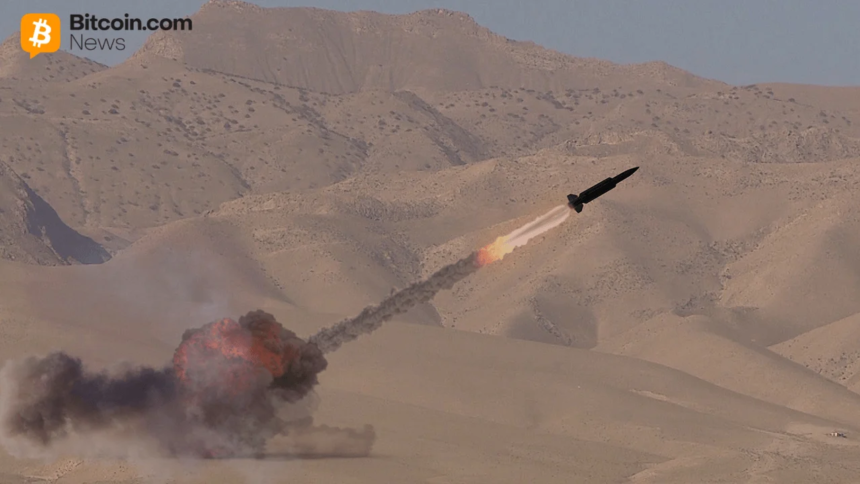
Hanke pointed out that the ongoing war has effectively closed the Strait of Hormuz to adversarial nations, with throughput reportedly dropping by approximately 95%. He framed Iran’s strategic positioning as one of strength rather than vulnerability, asserting that the country is quietly winning a war of attrition. Hanke described Iran’s military mobilization, which has seen over a million troops called up, emphasizing that Iran now controls this crucial global chokepoint. “They are in control of the Strait of Hormuz,” Hanke stated, suggesting that this control gives Iran significant leverage over Western economies, which are already suffering from increasing damage.
Moreover, Hanke noted a surprising uptick in Iranian oil exports since the beginning of hostilities, contradicting common assumptions about the war’s impact on Iranian revenues. He reported that Iranian crude is being sold from tankers exiting the Strait at higher prices and with less discounting than prior to the conflict. The Iranian rial has appreciated by 6% since the war commenced, even as inflation remains high at around 67% but has moderated from peaks above 80%.
Hanke also highlighted broader repercussions in global markets, citing that physical oil prices in Asia are trading substantially higher than futures prices, a gap he believes will close as market realities align with speculative valuations. He pointed to specific instances where countries, such as the Philippines, have declared energy emergencies due to supply disruptions, and New Zealand has started providing financial assistance to families struggling with fuel costs.
The economist placed significant emphasis on Russia’s position as the primary beneficiary of the conflict, as it produces vital commodities—oil, fertilizer, and helium—that are now constrained in the Gulf region. Hanke characterized Russia as strategically positioned to trade sanctions relief for greater access to these markets.
Hanke was critical of Israel’s strategies against Iran, dismissing the Mossad’s attempts at decisive action as a strategic miscalculation. He referred to intelligence assumptions predicting the fall of the Iranian regime shortly after the assassination of its supreme leader, which did not materialize. He described this outcome as a failure of strategy, stating, “This goes in the failure book,” and insisted that both U.S. and Israeli objectives have already faltered.
Addressing the U.S. economic context, Hanke challenged the narrative that the country is insulated from oil price fluctuations due to its status as a net energy exporter. He clarified that while the U.S. exports a significant amount of energy, it is still a net importer of crude oil, rendering it vulnerable to rising global oil prices. “Forget the fact that we’re somehow insulated from world prices in oil,” he remarked, calling such assertions from Washington misleading.
Turning to fiscal concerns, Hanke discussed the alarming state of the U.S. government’s balance sheet. Alongside former U.S. Comptroller General Dave Walker, he analyzed federal financial statements, revealing that as of September 2025, the U.S. is facing a dire situation with about $6 trillion in assets set against nearly $48 trillion in liabilities. When including off-balance-sheet liabilities like Social Security and Medicare, the total climbs to approximately $136 trillion. “You have a little over six trillion in assets and almost 48 trillion in liabilities,” Hanke warned, declaring this scenario indicative of insolvency and a rapidly deteriorating financial landscape.
In light of these findings, the bond market has reacted accordingly, as rising yields on 10-year Treasuries reflect investor apprehension regarding deficit growth. Hanke warned that as interest rates rise, the opportunity cost of holding gold—traditionally viewed as a safe-haven asset—increases, exerting downward pressure on its price. He maintains an ambitious price target for gold, estimating it could reach between $6,000 and $7,000 per ounce despite acknowledging that the momentum of price increases may slow due to rising yields and a strengthening dollar.
Hanke proposed two potential solutions to address the escalating liabilities: the establishment of a congressional commission tasked with examining existing financial obligations, and a constitutional amendment based on Switzerland’s debt brake model, which would limit spending growth to the rate of real GDP and necessitate a balanced fiscal approach over the business cycle. However, he remains skeptical about the likelihood of Congress taking decisive action on these proposals.