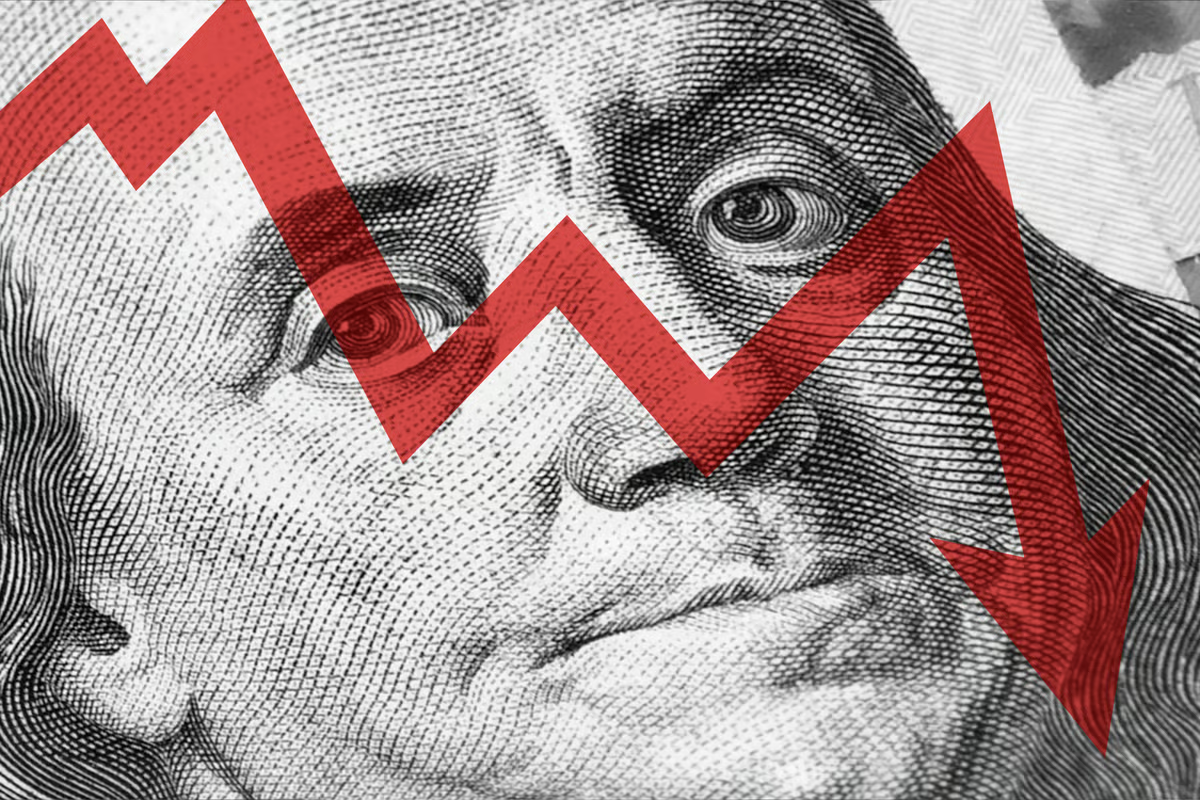
The stock market is approaching a critical juncture reminiscent of the dot-com era, as reflected in the ongoing robust performance of the S&P 500. The index has yielded an impressive average return of 21% in 2023 alone—essentially tripling its historical long-term average of about 7% after adjusting for inflation and reinvested dividends. This surge has been largely fueled by advancements in artificial intelligence (AI), a central theme captivating investors’ attention.
However, as the market enjoys this unprecedented rally, astute investors are urged to look beyond the rising stock prices and focus on more nuanced indicators of valuation. Among these is the cyclically adjusted price-to-earnings (CAPE) ratio, a valuable metric for assessing the overall health of the market. This ratio, which adjusts stock prices relative to earnings growth over the past decade, currently stands at a striking 39.8. Such levels were last witnessed in 2000, just prior to a significant downturn marked by the dot-com crash.
Historically, the CAPE ratio has reached similarly elevated levels only during two other notable periods: in the late 1920s before the Great Depression and in 2000. Each time the ratio peaked, it preceded substantial market corrections, suggesting an impending reversal in market fortunes—potentially as soon as 2026 and possibly extending beyond that timeframe. A rising CAPE ratio is often indicative of widespread market optimism, although it is critical to note that it does not necessarily foreshadow an immediate sell-off. Instead, continued increases typically lead to diminished returns as premiums on stock prices become precarious.
Amid these indicators, the S&P 500’s current market capitalization is pegged at an impressive $58 trillion. Notably, the ten largest companies in this index represent about $26 trillion, or 44% of its total market value. This concentration suggests that market movements are significantly influenced by a select group of trillion-dollar firms, many of which are benefitting from the ongoing AI buzz.
When assessing valuation through the lens of forward earnings multiples, major players such as Nvidia, Alphabet, Meta Platforms, Broadcom, Amazon, and Taiwan Semiconductor Manufacturing appear reasonably valued, if not underpriced. Thus, while the overall market may seem inflated, the highest risks are often linked to stocks outside the top 10 to 15 largest firms by market capitalization.
In light of these complex dynamics, market analysts recommend that prudent investors reassess their positions. It may be wise to reduce exposure to highly volatile growth stocks and any speculative ventures in hopes of substantial returns. Instead, emphasizing investments in more stable, diversified businesses may provide a safer long-term strategy. Many of the leading companies mentioned qualify as blue chips, known for their solid track records and resilience.
Moreover, maintaining a portion of one’s portfolio in cash can offer further protection and flexibility, allowing investors to navigate these uncertain waters—whether or not a significant market downturn occurs in the coming years.