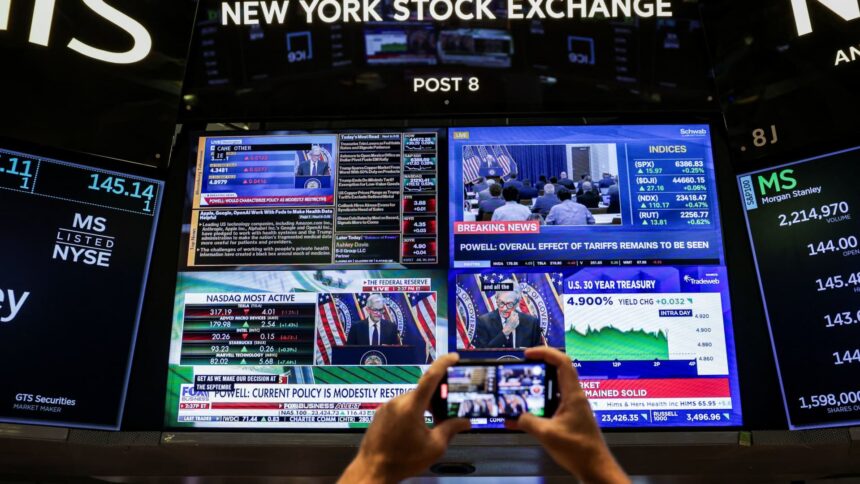
The stock market began September with volatility, fueled by Wall Street’s speculation regarding the Federal Reserve’s next interest rate move. On Friday morning, the S&P 500 and Nasdaq reached all-time intraday highs as investors reacted to weaker-than-anticipated jobs growth figures for August, which showed an increase of only 22,000 nonfarm payrolls compared to the expected 75,000. This slower growth reinforced expectations that the Federal Reserve may opt to cut interest rates by 25 basis points in its upcoming meeting, along with the potential for two additional cuts before the end of the year. Echoing this sentiment, the 10-year Treasury yield fell below 4.1%, marking its lowest level since April.
Despite the initial positive momentum, the market quickly retreated. Concerns about the labor market’s slower pace overshadowed rate cut optimism. The July jobs figure was upwardly revised to a tepid 79,000, highlighting ongoing weaknesses with a revision of June’s figures down by 13,000.
While both the S&P 500 and Nasdaq experienced slight declines by the close, they recorded weekly gains, with the S&P 500 up nearly 0.3% and the Nasdaq up over 1%. Jim Cramer, a notable market commentator, remained optimistic despite the fluctuations, particularly regarding Home Depot, which he suggested was primed for further gains due to lower borrowing costs which are expected to positively impact the housing market. Since mid-June, Home Depot’s stock has increased with growing expectations of interest rate cuts becoming reality.
Cramer also pointed to a significant drop in the national average for a 30-year fixed-rate mortgage, which fell 16 basis points to 6.29%, representing the most substantial single-day drop in over a year.
Investor focus was not solely on monetary policy; corporate earnings also played a crucial role in market sentiment. Among the week’s highlights was Broadcom, whose shares surged over 9% following a strong earnings report, buoyed by record guidance and a revelation of $10 billion in custom AI-related orders from a new customer—speculated to be OpenAI. This marked Broadcom as the week’s most significant gainer, with a total rise of 12.6%. Analysts noted the sustained demand for AI semiconductors and networking solutions showcasing the company’s solid growth trajectory.
Conversely, Salesforce’s earnings report stirred some anxiety, despite beating both revenue and earnings expectations. Concerns about a lackluster revenue guide for Q3 led to a near 5% drop in the stock after its release, although it managed to recover part of the losses. For the week, Salesforce ultimately finished down just over 2%. Adjustments were made to the price target for Salesforce, lowered from $350 to $300 amidst worries about its growth potential.
On a brighter note for Apple, investors celebrated a favorable ruling in a significant antitrust case involving Google, which allowed Alphabet to continue payments for preloading Google Search on Apple devices. This decision propelled Apple’s shares up more than 3%, as Cramer suggested it could open avenues for additional revenue streams, particularly from AI-related partnerships.
Cramer emphasized a long-term strategy for investing in Apple, advising investors to “own, don’t trade” the stock, and expressed optimism that this ruling could yield billions more in revenue for the tech giant.
In summary, despite a rocky start to September, key corporate earnings reports and potential shifts in monetary policy offered both challenges and opportunities for investors, with notable performances from companies like Broadcom and Apple amid a backdrop of cautious optimism regarding economic growth indicators.