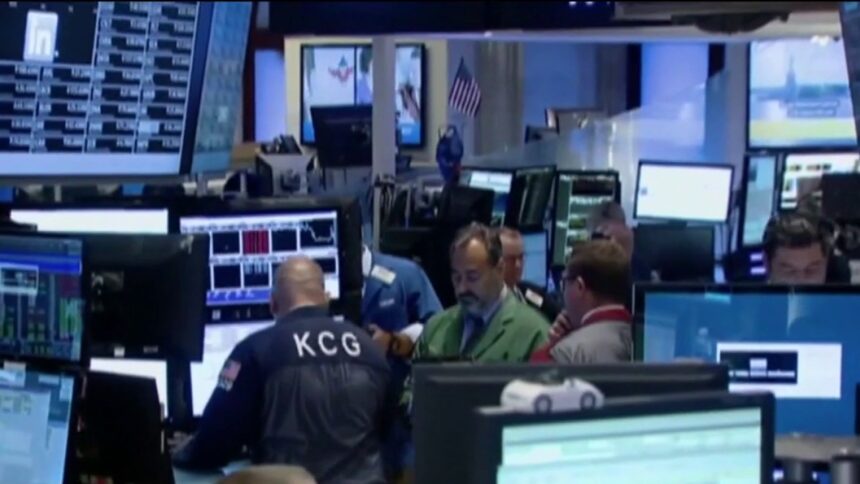
As President Donald Trump prepares to deliver his State of the Union address on Tuesday, the stock market is facing significant turmoil, causing concern for millions reliant on retirement plans tied to market performance. Analysts and investors alike are watching closely for insights into economic policy and its potential impact on market stability.
The current landscape reflects a persistent apprehension within the markets, particularly following the announcement of new 15% tariffs that have added layers of uncertainty for businesses. These tariffs are set to expire after five months unless Congress takes action to extend them, resulting in increased trepidation among investors. Terry Connelly, Dean Emeritus of the Golden Gate University School of Business, highlighted the challenges these tariffs bring, likening planning for business amidst such unpredictability to navigating an airline through a snowstorm.
Public sentiment mirrors the stock market’s skepticism. Residents like Ronettt King expressed disbelief in the president’s optimistic assertions about the economy, which she described as “stupid.” This disconnect reflects a broader sentiment among individuals who are feeling the effects of economic instability firsthand.
The uncertainty is extending beyond tariffs; it also affects international trade. Mike Jacob, CEO of the Pacific Maritime Shipping Association, noted that many trading partners are beginning to pivot toward other nations, prompted by the shifting trade policies of the U.S. This trend signifies a changing landscape in global trade dynamics, as businesses adapt to survive.
Another significant concern is the rapid evolution of artificial intelligence and its potential economic implications. Experts warn that while AI could transform various industries, it also presents uncertainty regarding job security. Kirthi Kalyanam, a professor at Santa Clara University, explained that the financial investment required for AI infrastructure is substantial, often making the replacement of human jobs cost-prohibitive.
As the president’s speech approaches, citizens are encouraged to engage with the prevailing issues affecting their livelihoods. Maryellen Mullin-Fong, a family therapist, emphasized the emotional and financial instability stemming from inconsistent leadership. This volatility affects not only the markets but also public confidence in the economy.
With the stakes high, all eyes will be on the president’s address at 6 p.m. Tuesday, as many hope for clarity in the policies that dictate both economic health and market performance. The interactions of tariff fluctuations, global trade relationships, and technological advancements will undoubtedly shape the financial future for millions.