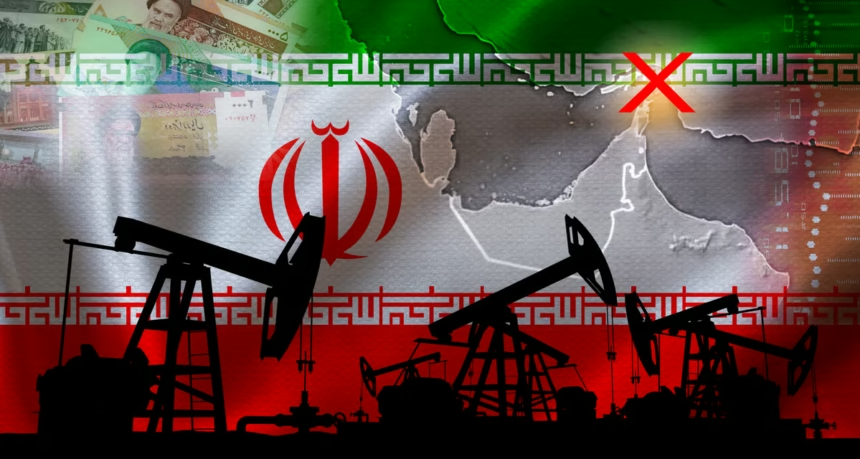
A significant sell-off rocked the stock market recently as fears escalated regarding the potential expansion of attacks in Iran into a broader regional conflict. The situation was compounded by a voluntary cessation of shipping through the vital Strait of Hormuz, through which approximately 20% of the world’s petroleum products transit. The halt in shipping was not due to any direct action from Iran but was instead a reflection of rising anxiety among shippers about the risks involved in navigating through the area.
During the tumultuous trading period, the S&P 500 index plummeted by 169 points, equating to roughly 2.5%, within the first hour of the market’s opening on Tuesday. However, a statement from former President Donald Trump, shared via his social media platform Truth Social around 2:35 p.m., swiftly rejuvenated the market sentiment. His post offered reassurance and stability, leading to an immediate bounce in stock prices.
In his message, Trump announced that the U.S. government would extend political risk insurance and guarantees to companies engaged in maritime trade within the Persian Gulf. More critically, he emphasized that the U.S. Navy would provide escorts for oil tankers and other vessels traversing the Strait of Hormuz, reinforcing the commitment to ensure safe passage through this strategic waterway. Trump declared, “No matter what, the United States will ensure the FREE FLOW of ENERGY to the WORLD.”
Following his remarks, the S&P 500 managed to close the day down by less than 1%, recovering some of the initial losses. Similarly, Brent crude oil, which had peaked at over $81 per barrel during the trading day, saw a decline, settling back near the $80 mark. The next day, the stock market further rebounded, recouping much of the losses from the previous session.
Despite this temporary stabilization, volatility in the market remains a concern. The CBOE Volatility Index, commonly referred to as the VIX and known as Wall Street’s fear gauge, reached a level of 23.5 on Tuesday, reflecting heightened apprehension among investors. Currently, it hovers around 21, significantly above the average level observed throughout the year.
Market analysts, including notable figures like Edward Yardeni, anticipate potential complications in the environment leading to further market fluctuations. Even in scenarios where a short and limited conflict in the Middle East is expected, analysts foresee ongoing volatility that could prompt additional market pullbacks. Yardeni specifically indicated that a correction of around 10% from the record high set on January 27 is plausible, noting that the S&P 500 is presently about 1.5% beneath that peak.
Given the current climate, it appears that Trump may need to engage with his audience on Truth Social more frequently in the upcoming weeks to address concerns and potentially curb market instability.