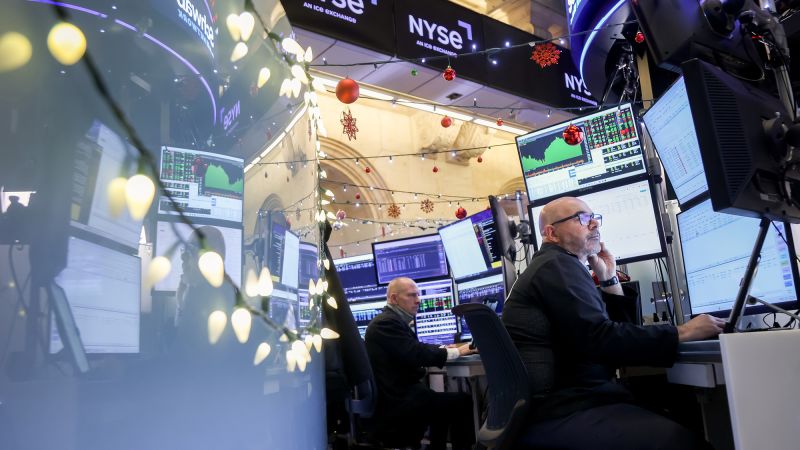
In a dramatic shift, the stock market has rebounded after a downturn fueled by concerns over a potential bubble in artificial intelligence stocks. Investors are now feeling optimistic, largely due to expectations surrounding an imminent interest rate cut from the Federal Reserve at its upcoming meeting, which is set to be the last of the year.
The recent surge comes after a lull in early November, with many anticipating that a reduction in interest rates could bolster the stock market significantly. Lower rates tend to decrease savings and borrowing costs for both individuals and businesses, thereby encouraging increased spending and investment. This, in turn, can spur business activity and enhance corporate earnings.
Moreover, interest rate cuts can make stocks more appealing compared to short-term government bonds and money market funds, as the yields on these fixed-income instruments decrease. The overall effect can be a powerful incentive for investors to favor stocks over other asset classes.
Jonathan Krinsky, chief market technician at BTIG, noted that the stock market’s recovery has closely aligned with rising expectations for a rate cut this December. Market trackers indicate that traders are pricing an 89% probability that the Fed will cut rates at its next meeting, a sentiment that has helped reverse last month’s market weakness.
The Fed’s decision to lower rates comes amid worries over a softening labor market. Investors view reduced rates as a catalyst that can energize stock prices. The Fed’s benchmark interest rate plays a crucial role in shaping interest rates throughout the economy, impacting financing costs across various sectors.
The Russell 2000 index, which represents smaller companies more sensitive to rate changes, recently achieved a record high. Experts stress that these firms, particularly in sectors like real estate and manufacturing, stand to gain significantly from lower interest expenses, which can enhance their profit margins.
Despite current bullish sentiments regarding rate cuts, market analysts remain cautious. As Wall Street is inherently forward-looking, uncertainties linger regarding the trajectory of rate cuts in the upcoming months, particularly in January.
Analysts are also awaiting the Fed’s quarterly summary of economic projections, expected to provide insights into officials’ expectations for interest rates moving forward. There is speculation that if inflation were to accelerate again, it could constrain the Fed’s ability to implement a series of rate cuts, urging a more cautious approach in the future.