Recent discussions surrounding the stock market have brought to light the relationship between Federal Reserve interest rate policies and stock valuations. While there are concerns that the current enthusiasm around artificial intelligence might be inflating a market bubble, some analysts suggest that the Fed’s plans to continue cutting interest rates could mitigate these fears.
The rationale behind this stance is rooted in the long-standing market principle of “don’t fight the Fed.” When interest rates decline, investors often shift their focus from short-term, lower-yield assets such as Treasury bills to equities in search of better returns. Historical trends indicate that lower rates can justify elevated stock valuations, as they also tend to spur economic growth and bolster the job market.
Katie Klingensmith, chief investment strategist at Edelman Financial Engines, expressed skepticism about confronting the Fed’s influence. She emphasized that the Fed is primarily focused on potential risks to the labor market and overall economic stability rather than just financial asset prices. Similarly, Jeff DeGraaf, founder and chairman of Renaissance Macro Research, noted that bubbles typically implode during tightening cycles, not easing ones, suggesting a more favorable environment for stocks in the short term.
Supporting this view, data from Piper Sandler examined the causes of significant corrections in the S&P 500 since 1965, revealing that over half of corrections were linked to rising interest rates. Rate hikes often slow economic growth and make bonds more appealing, which can negatively impact stocks.
On the other hand, analysts caution that the market could face headwinds even without rate hikes. Lauren Goodwin, chief market strategist at New York Life Investments, pointed out that signals of resurgent inflation could lead to volatility. If investors start to perceive that inflation is no longer under control, this shift could spark a pullback in stock prices.
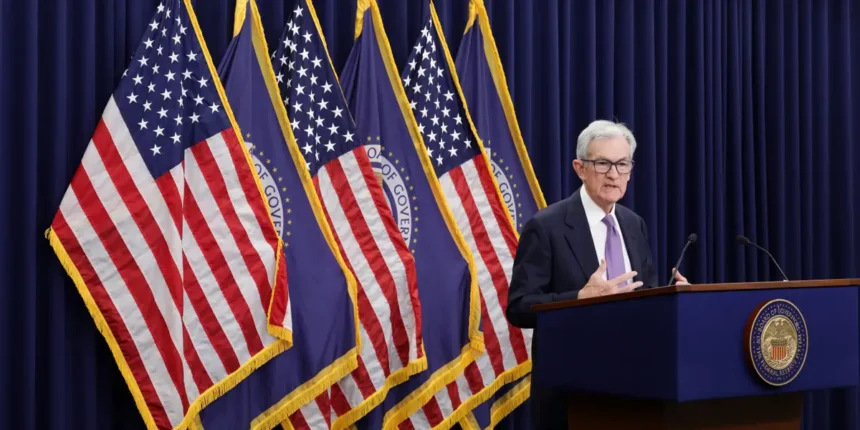
Recent comments by Fed Chair Jerome Powell underscored these uncertainties, as he indicated that future rate cuts are not guaranteed. Following his statements, the S&P 500 experienced a decline of up to 0.7%, highlighting market sensitivity to Fed communications.
Despite these concerns, investors remain optimistic about potential rate cuts, with markets pricing in a nearly 73% chance of a 25-basis-point reduction in December, followed by another cut anticipated by April 2026. However, should sentiment shift and confidence in rate cuts diminish, stocks might face increased pressure.
Another factor to monitor is the recent earnings reports from major tech firms like Meta and Microsoft, which revealed growing investor skepticism regarding AI investments. Both companies announced intentions to increase expenditures in 2026, leading to notable declines in their stock prices—Meta’s shares plummeted over 10%, while Microsoft’s fell by more than 2.6%.
As the market navigates these complexities, it remains to be seen how interest rate trajectories and evolving corporate strategies will impact investor sentiment and stock market performance moving forward.