The stock market reached significant milestones recently, with the S&P 500 achieving an intraday high of 6,699.52 and a closing high of 6,693.75, marking the index’s rise by 12.8% year-to-date. However, alongside this bullish trend, there are concerns regarding valuation metrics that suggest the stock market may be overpriced.
Popular valuation ratios paint a complex picture. The forward price-to-earnings (P/E) ratio is around 22x, surpassing historical averages. This metric reflects anticipated earnings over the next year but lacks insight into a company’s longer-term potential. In contrast, the trailing P/E stands at approximately 28x, relying on actual earnings from the past year, but can also lead to misleading conclusions since it’s backward-looking.
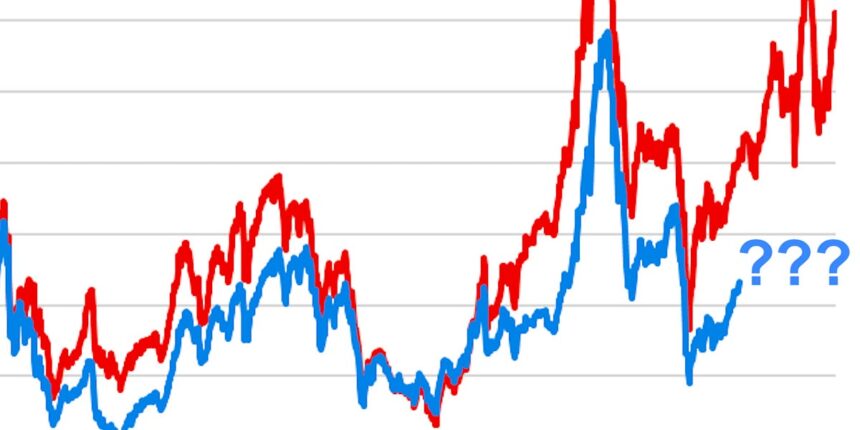
Another key ratio, the cyclically-adjusted P/E (CAPE), currently sits at 40x—its highest since the late 1990s dot-com bubble. While this ratio averages earnings over the past decade to smooth out volatility, it remains a retrospective tool that may not adequately reflect future performance.
Ideally, a forward-realized CAPE metric, which factors in an average of the next 10 years of earnings, would offer a more comprehensive view. Although predicting earnings a decade out is infeasible, historical analysis from 2015 onwards suggests valuable insights. For instance, in 2014, Shiller’s CAPE indicated high valuation, while the realized CAPE suggested the market was fairly valued due to healthy earnings growth in subsequent years.
Presently, various economic indicators show mixed signals. Inflation appears to be heating up, with the personal consumption expenditures (PCE) price index rising by 2.7% year-over-year in August, alongside a slight uptick in consumer spending and improved business investment activity. However, new unemployment claims have declined, indicating a relatively stable labor market, yet continued claims remain elevated, suggesting potential weaknesses.
In terms of consumer behavior, card spending data shows moderate growth, favorable for retail sales outlook, even as confidence wanes among certain demographics. With mortgage rates slightly increasing and home sales reflecting a downward trend, the housing market faces challenges but new home sales have surged significantly, attributed to lower mortgage rates and builder incentives.
Corporate earnings forecasts remain optimistic, driven by strong demand and healthy consumer balance sheets. While growth is slowing from previous highs, investors are still hopeful for robust earnings growth over the upcoming decade. Yet, there are inherent risks—political uncertainties, economic fluctuations, and global trade disruptions could impact long-term trajectories.
As the market continues to test all-time highs, expert analyses reiterate the importance of focusing on long-term investment strategies. Despite the volatility and potential for downturns, historical resilience of the market underscores the notion that patient, informed investing often yields favorable outcomes over extended periods. However, with critical risks looming and economic indicators sending mixed signals, caution is advised for those navigating the complexities of current market conditions.