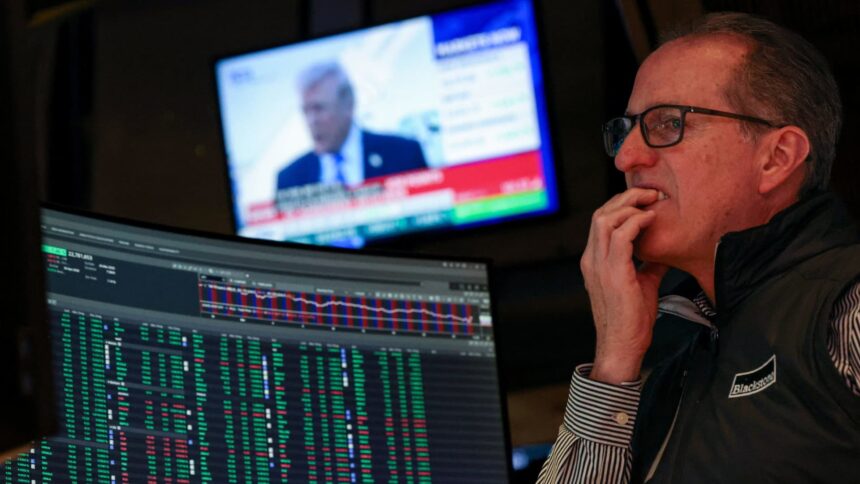
The stock market experienced a significant uptick this week, driven by growing optimism surrounding a potential resolution to the ongoing Iran conflict. The S&P 500 and Nasdaq Composite both broke a streak of five weeks of losses on Thursday, with gains of 3.4% and 4.4%, respectively. Similarly, the Dow Jones Industrial Average rose by 2.96%, marking its first positive week in six.
Throughout the week, declining oil prices provided much-needed relief to the stock market, supporting a rebound. This negative correlation has been evident since the onset of the war on February 28. However, on Thursday, oil prices made a surprising increase, yet the S&P 500 and Nasdaq still managed to recover, signaling resilience within the market. West Texas Intermediate (WTI) crude oil for May delivery experienced an 11.4% surge on Thursday alone, and nearly 12% throughout the four-day trading period, marking its sixth week of gains out of the last seven.
This rebound came after a particularly tough week for the market, where the S&P 500 faced a 2.1% decline from March 23 to March 27, its largest weekly drop since October. The Nasdaq fell by 3.2%, the worst performance since the previous April. Market participants were apprehensive, given the mixed messages coming from Iranian authorities and statements from President Donald Trump regarding the war’s status.
As the week progressed, the market responded positively to reports suggesting a possible end to hostilities. An unconfirmed report on Tuesday indicated that Iranian President Masoud Pezeshkian was open to negotiations for a resolution, prompting a surge in stock prices. This momentum continued on Wednesday when Trump stated that U.S. military forces could leave Iran in “two or three weeks.” Even when oil prices rose again on Thursday, the S&P 500 and Nasdaq managed to close higher, defying expectations.
Jim Cramer commented on the surprising resilience, noting that such a snapback was unexpected. He remarked, “Any other day when we have oil pop like this, and we should’ve been down perhaps 1.5% to 2%.” His remarks reflect the cautious optimism felt by many traders navigating this uncertain environment.
Market movers also paid close attention to fresh labor market data released throughout the week. The Bureau of Labor Statistics’ Job Openings and Labor Turnover Survey (JOLTS) report on Tuesday revealed a decline in job openings that exceeded expectations. Furthermore, the ADP’s private-sector hiring report indicated a modest gain of 62,000 jobs in March. On Friday, the official jobs report reported an increase of 178,000 payrolls, significantly surpassing the expected addition of 59,000. These mixed signals suggest that, despite the conflict-induced turbulence, the labor market remains relatively strong.
The health of the labor market is pivotal, as it directly influences the Federal Reserve’s decision-making regarding interest rates. Currently, traders anticipate no rate cuts through the remainder of 2026. However, that outlook could shift, particularly if Trump’s nominee for the Federal Reserve chair, Kevin Warsh—who has advocated for easing monetary policy—succeeds Jerome Powell when his term expires in May.
Additionally, the week was marked by notable initial public offering (IPO) activity. Notably, Elon Musk’s SpaceX filed for an IPO, potentially aiming for a staggering valuation of $1.75 trillion. Anticipation also builds around OpenAI’s IPO, which recently concluded a massive funding round at a valuation of $852 billion. Other companies, including Anthropic and Databricks, are also contemplating public offerings this year.
While these developments in the IPO sphere are significant, they remain overshadowed by the ongoing conflict. However, if peace is achieved in the Middle East, the potential surge of IPOs could markedly influence market dynamics and stock prices. This could benefit financial institutions like Goldman Sachs and Wells Fargo, particularly after a sluggish first quarter. Yet, the influx of new stock supply may necessitate other investors to adjust their portfolios, as they typically need to sell existing holdings to make room for new shares.
Overall, as the market navigates these evolving narratives, investors remain vigilant, balancing optimism with caution amid ongoing global uncertainties.