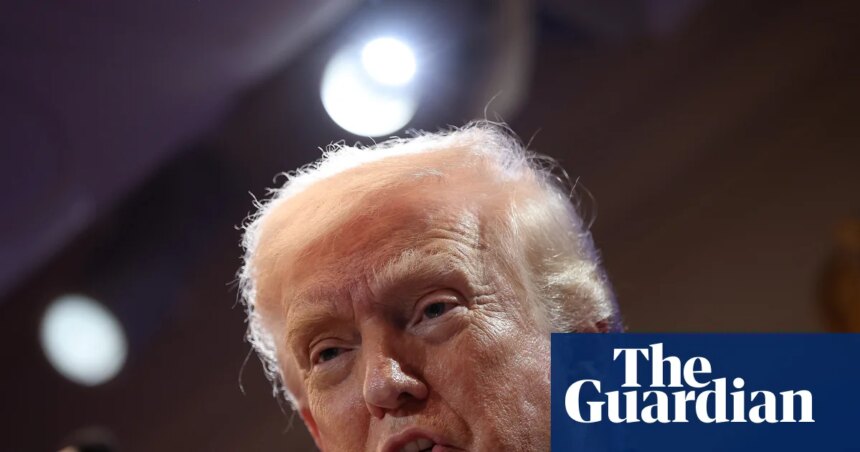
Stock markets experienced a significant setback on Monday, largely driven by President Donald Trump’s decision to press forward with new tariffs on U.S. trading partners. This move comes in the wake of a U.S. Supreme Court ruling that found Trump had overstepped his legal authority in imposing tariffs last year. The continued uncertainty surrounding global trade agreements led to unease among investors, causing notable declines in U.S. share prices. The Dow Jones Industrial Average fell by 1.4% in early trading, while the S&P 500 and Nasdaq 100 recorded losses of 0.9% and 1.1%, respectively. European stock markets similarly faced declines.
Amidst this turbulent backdrop, shareholders found themselves grappling with the implications of Trump’s escalating trade war. Following the Supreme Court’s ruling on Friday, the president announced plans to introduce temporary tariffs on all imports to the United States. Initially set at 10%, these tariffs were later increased to 15%, utilizing a section of the Trade Act of 1974 that has never before been enacted in this manner.
On his Truth Social platform, Trump issued a stern warning, suggesting that he could impose tariffs in an even more aggressive manner. He cautioned that countries attempting to “play games” with the Supreme Court’s decision could face significantly higher tariffs than previously agreed upon. “Any Country that wants to ‘play games’ with the ridiculous Supreme Court decision, especially those that have ‘Ripped Off’ the U.S.A. for years, and even decades, will be met with a much higher Tariff, and worse, than that which they just recently agreed to. BUYER BEWARE!!!” he stated.
Despite Trump’s defiance, evidence of growing resistance to his trade policies surfaced among the American public. A YouGov poll conducted shortly after the Supreme Court’s ruling indicated that approximately 60% of Americans supported the decision to strike down Trump’s tariffs, reflecting bipartisan approval. Approval rates for the ruling included 88% of Democrats, 63% of independents, and a significant minority of 30% of Republicans.
The backlash against Trump’s tariffs appears to be compounded by rising prices, with many Americans attributing increased costs of goods and services directly to the tariffs. YouGov’s surveys revealed that Republicans were four times more likely to indicate that the tariffs have driven up prices rather than reduced them.
Public frustration was apparent even before the Supreme Court’s decision, as a Fox News poll showed that 63% of registered voters disapproved of Trump’s handling of tariffs, while only 37% approved. This sentiment may be increasingly concerning for Republicans as they approach the midterm elections scheduled for November, suggesting that trade policies could become a significant point of contention in the political landscape.