








London’s stock market opened on a negative note, declining nearly 1 percent and aligning with a larger global sell-off that initiated in the United States before spreading to Asia and Europe as investors opted for safer assets. The FTSE 100 index tumbled by 0.94 percent, or 91 points, settling at 9,584.64, while the FTSE 250 index fell by 1.28 percent. This downward trend was mirrored in continental Europe, where Germany and France experienced a decline of 1.3 percent in early trading.
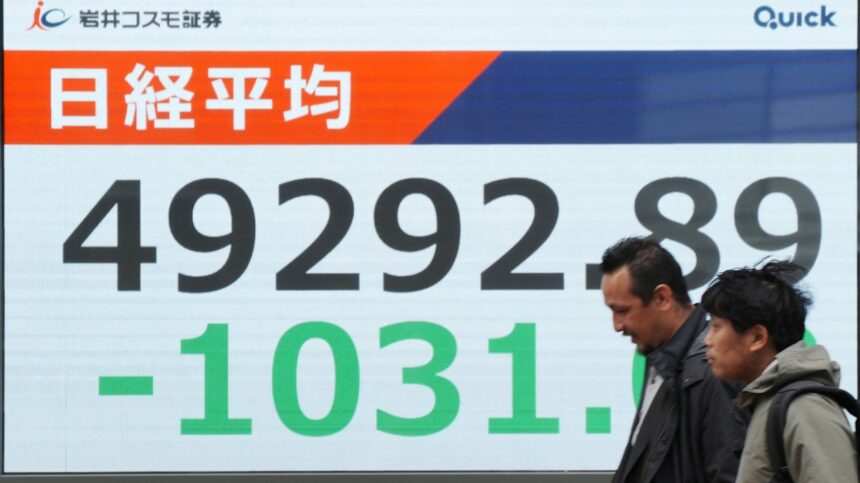
The unsettling mood extended to Asia, where Tokyo’s Nikkei index dropped by 3.2 percent, South Korea’s Kospi fell by 3.3 percent, and various markets across China, Australia, and Taiwan faced considerable losses, all fueled by a decline in technology stocks that followed Wall Street’s downturn. Cryptocurrency sentiment was similarly affected, with Bitcoin remaining under $90,000 but showing slight upward movement, all the while marking a significant decline for the year.
In an interesting twist, defensive stocks such as Imperial Brands and British American Tobacco saw a rise in share value amidst the market turbulence, while mining stocks led the decline. Imperial Brands reported a 4.6 percent increase in annual adjusted operating profit, surpassing expectations due to higher pricing for its tobacco products and increasing demand for alternative smoking solutions such as vapes. The company’s revenues, after taxes, reached £8.3 billion for the fiscal year ending in September, a 1.9 percent increase year-on-year. Sales for smoking alternatives increased by nearly 14 percent, highlighting a growing trend in oral nicotine demand across Europe and the U.S. Meanwhile, traditional cigarette sales saw a modest increase of 3.7 percent year-on-year, primarily driven by price hikes.
In another market development, Novo Holdings divested its entire 7.8 percent stake in the FTSE 100 woundcare company Convatec for approximately £351 million at a share price of 227p. The placement was handled by Goldman Sachs and Morgan Stanley, with the proceeds not benefiting Convatec directly, as the company is not issuing any new shares.
The market’s unease was compounded by the UK’s Competition and Markets Authority (CMA) launching investigations into several companies, including StubHub and Viagogo, for potentially misleading online pricing practices. These investigations mark the first case initiated under newly strengthened consumer protection powers, aimed at ensuring transparency in consumer pricing, especially in light of mounting economic pressures. CMA chief executive Sarah Cardell emphasized the need for consumers to trust that displayed prices and discounts are valid.
Economic sentiment in the UK appeared bleak as mounting speculation regarding potential tax increases ahead of the upcoming budget contributed to hesitance among businesses. Crest Nicholson, a housebuilder, warned its full-year profits would be at the lower end of their expectations, attributing the uncertainty to evolving government tax policies. This sentiment was echoed by surveys from Barclays and S&P, revealing that many companies have paused investment decisions, with household confidence dropping to a four-month low.
In the tech sector, Alphabet CEO Sundar Pichai issued a cautionary statement, arguing that no technology company, including Google, would be immune to repercussions if the ongoing artificial intelligence investment frenzy were to unravel. He highlighted that current valuations resemble past tech bubbles, prompting concerns about investment sustainability across the sector.
As the day unfolded, stocks in Asia continued to decline, led by steep cuts in technology stocks fueled by Wall Street’s recent dip. With the U.S. markets closing lower, investors are bracing themselves for forthcoming quarterly results, creating an atmosphere of uncertainty as financial markets await a pivotal job report later this week. Expectations for markets in Europe, including the FTSE 100, are set to be similarly grim, with significant initial declines anticipated.


