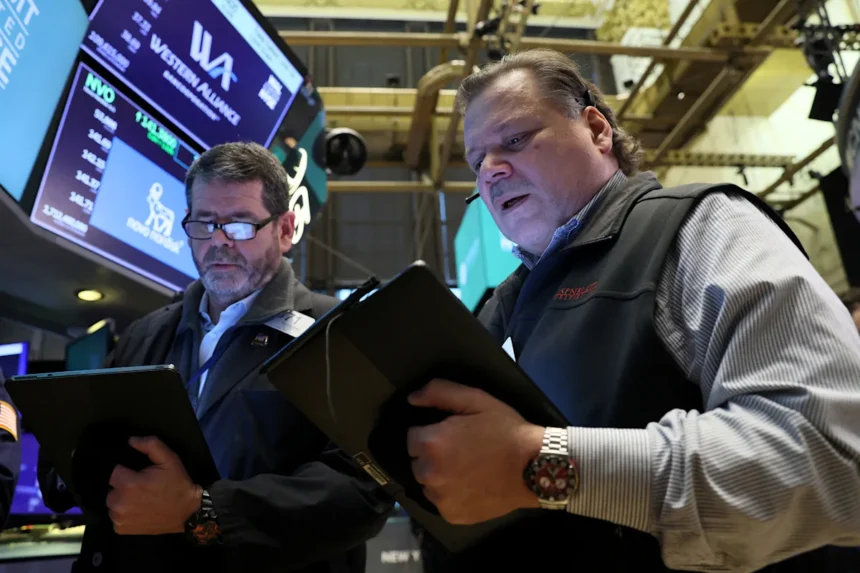
U.S. stocks experienced a turbulent trading session on Friday, ultimately closing mixed as investors processed a cooler-than-expected inflation report, raising questions about the trajectory of interest rates. The S&P 500 inched slightly above the flatline, while the Dow Jones Industrial Average managed a modest gain of 0.1%. In contrast, the tech-heavy Nasdaq Composite dipped by 0.2%. All three major indexes ended the week with losses; the Dow and S&P 500 both reported declines exceeding 1%, and the Nasdaq fell by more than 2%.
The latest data from the Bureau of Labor Statistics indicated that inflation moderated in January, with the Consumer Price Index (CPI) rising just 0.2% compared to the prior month, translating to an annual increase of 2.4%. This inflation reading could significantly influence the already complex policy decisions of the Federal Reserve. Following the report, traders began to increase bets on potential interest rate cuts, with many anticipating a quarter-point reduction by June. While a majority still predict two cuts by the conclusion of 2026, a growing number of investors are now betting on additional reductions.
Market dynamics were further shaken by a wave of selling attributed to concerns over AI disruptions, affecting traditional sectors such as real estate, logistics, and transportation—areas once considered safe investments in the face of technologically driven stocks. Notably, all seven of the “Magnificent Seven” tech giants closed lower, leading to substantial losses across major indexes for the week.
Amid this backdrop, earnings stirred contrasting reactions from the market. Shares of Rivian surged more than 25% after the electric vehicle manufacturer beat expectations in its fourth quarter earnings report, announcing readiness to deliver its R2 midsize model by summer. Similarly, Moderna’s stock climbed 10% after outperforming quarterly revenue estimates, buoyed by resilient sales of its COVID-19 vaccine.
Conversely, Pinterest’s shares tumbled over 20% as the social media platform fell short of revenue projections, raising analysts’ concerns regarding potential AI threats to its operations. Applied Materials also experienced a notable jump of over 11% following a strong earnings report, fueled by significant demand for semiconductor equipment, which plays a critical role in the AI sector.
Additionally, Bitcoin made a notable comeback, rising 5% as optimism grew regarding forthcoming crypto legislation in Congress. The cryptocurrency rebounded to approximately $69,000, recovering from a recent drop that had seen it near $65,000.
Nvidia’s stock, on the other hand, slid over 1% despite an overall positive tone in the tech sector, continuing a trend of range-bound trading since its peak last October.
In the broader economic context, consumer energy prices largely fell in January, aligning with decreasing oil market trends. Headline energy costs dropped 1.5% from the previous month, although they remained elevated compared to the previous year. Gasoline prices, a significant factor for consumers, saw a month-on-month decline of 3.2%, though they are still down from $3.16 a year ago.
Overall, Friday’s trading session concluded a volatile week, with heightened scrutiny on earnings reports and the implications of AI disruptions in various industries. The upcoming week will see shortened trading hours due to Presidents’ Day on Monday, adding another layer of complexity for investors navigating this ever-evolving market landscape.