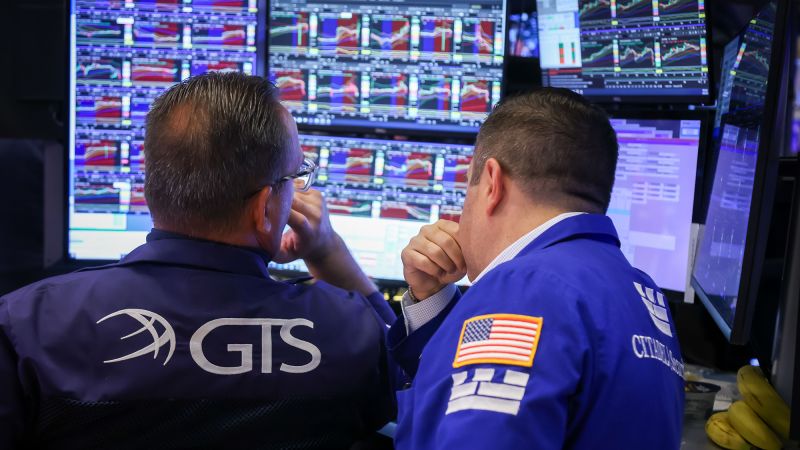
Stocks were poised for a downturn on Wednesday as the U.S. government officially entered a shutdown for the first time in seven years, leaving Wall Street to assess the potential economic fallout from the impasse. Dow futures dropped by 219 points, or 0.47%, while S&P 500 futures saw a decline of 0.5%, and Nasdaq 100 futures slipped by 0.6%.
The shutdown commenced at midnight after lawmakers were unable to reach an agreement on a funding bill, leading to uncertainty that could disrupt key government data releases and result in many federal employees being furloughed indefinitely. Historically, the stock market has demonstrated resilience in the face of government shutdowns; since 1976, there have been 20 such instances, averaging eight days in duration. According to Adam Turnquist, chief technical strategist at LPL Financial, the S&P 500 generally gains an average of 1.2% and 2.9% in the month and quarter following a shutdown, respectively.
Turnquist noted, “Investors have generally looked past budget-related disruptions, prioritizing corporate earnings, broader economic trends, and other key macroeconomic factors.” However, sectors heavily reliant on government contracts, such as defense and life sciences, may be more negatively affected by the shutdown.
The market had recently experienced strong momentum; the S&P 500 recorded a 3.5% gain in September, marking its best performance for the month since 2010. Notably, the Dow reached a record high just a day prior to the shutdown’s onset.
Despite historical trends, some investors are concerned about the unique risks associated with the current shutdown, especially amid heightened scrutiny of economic data. Jennifer Timmerman, an investment strategy analyst at Wells Fargo Investment Institute, stated that while the economic impact of the shutdown may be limited and transitory, it could trigger financial market volatility, particularly if delays in reporting obscure the Federal Reserve’s path regarding interest rate cuts.
Keith Buchanan, senior portfolio manager at Globalt Investments, expressed a more cautious outlook, suggesting that the market may not fully appreciate the risks that could accompany a prolonged and contentious shutdown. “We don’t feel like the market is appropriately pricing the risk of this getting worse than it has in the past,” he said.
Nonetheless, the S&P 500 had achieved five consecutive months of gains, reflecting a market climb in the face of geopolitical tensions, renewed tariff threats, and concerns regarding consumer sentiment. Eric Teal, chief investment officer at Comerica Wealth Management, downplayed the significance of the shutdown on market performance, describing it more as a political event rather than a direct market concern.
With corporate earnings exceeding expectations and contributing to the rally, there remains optimism regarding sustained stock price increases, particularly as investors await third-quarter earnings reports. Moreover, the anticipation of interest rate cuts by the Federal Reserve is believed to support consumer spending, investment, and business activity, creating a favorable environment for stocks.
Ulrike Hoffmann-Burchardi, global head of equities at UBS Global Wealth Management, advised investors to focus on market drivers such as continued Fed rate cuts, strong corporate earnings, and advancements in artificial intelligence, rather than the uncertainties posed by the shutdown.
As the stock market hovers near record highs, a notable rise in gold and silver prices indicates an underlying concern about ongoing political and economic instability. José Torres, a senior economist at Interactive Brokers, highlighted that the government shutdown has prompted investors to gravitate toward safe-haven assets, as evidenced by the increases in precious metal prices both ahead of and during the shutdown period.