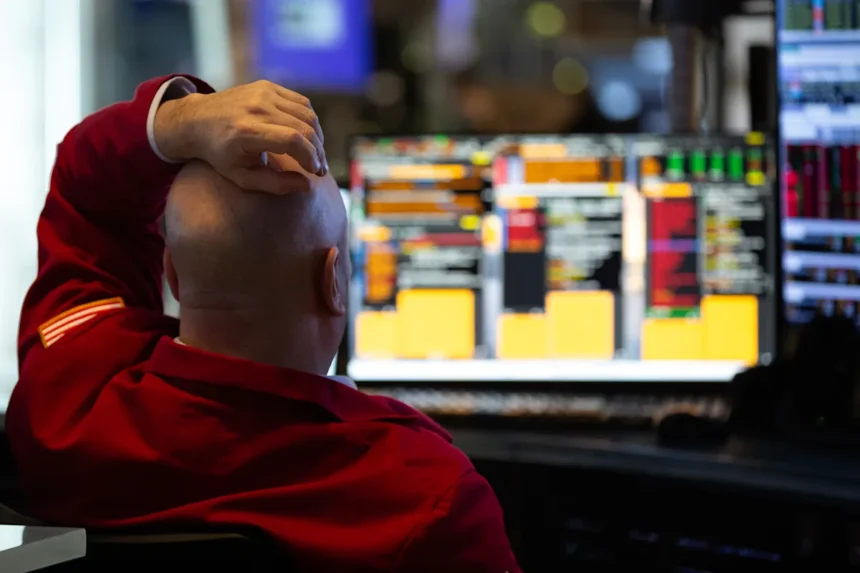
Stocks stabilized on Friday following a significant sell-off, as investors navigated the developments in the ongoing conflict in Iran, now entering its second week, and awaited crucial inflation data that could influence Federal Reserve policy.
Futures for major indices, including the Dow Jones Industrial Average and the S&P 500, each gained 0.4%, while the Nasdaq 100 futures mirrored this gain. This rebound comes amidst heightened scrutiny of the intensifying Iran war. Recent strikes by Israel on Tehran and reported missile attacks from Iran affecting Dubai and Turkey have contributed to market volatility. Additionally, the U.S. confirmed that four crew members were killed when a military refueling plane crashed, underscoring the war’s escalating nature.
The conflict has led to a surge in oil prices, destabilizing financial markets. On Thursday, the main U.S. stock benchmarks dropped to their lowest levels since November 2026. In a bid to mitigate the soaring oil costs, the U.S. issued a second waiver for purchases of sanctioned Russian crude. Analysts warn, however, that while this move may provide some relief, it cannot resolve what is perceived as the most significant oil supply disruption in history, especially as Iran’s new leadership threatens to keep the Strait of Hormuz closed.
On Friday, crude prices fell, with West Texas Intermediate futures dropping by 2% to below $94 a barrel and Brent crude futures slipping under $100 after surpassing that threshold for the first time since August 2022.
These oil price fluctuations, coupled with persistent inflationary concerns, have shifted expectations regarding Federal Reserve policy, leading traders to reduce bets on potential interest rate cuts within the year. The focus is now on the upcoming release of the Personal Consumption Expenditures (PCE) price index, which will be crucial to understanding inflation trends. Additionally, a revision of fourth-quarter GDP growth is set to be unveiled, following an initial reading that significantly missed expectations.
After a disappointing February jobs report, market participants are also keenly awaiting the Friday release of the Job Openings and Labor Turnover survey, as well as data reflecting consumer confidence for March from the University of Michigan.
Despite rising oil prices, energy companies are reportedly cautious about increasing drilling operations. Analysts note that leading global oil companies such as Exxon Mobil, Chevron, and ConocoPhillips are prioritizing long-term price stability over responding aggressively to short-term price spikes. This approach reflects a broader industry trend towards conservative long-term planning amidst geopolitical risks that affect market conditions.
After briefly climbing above $100 per barrel, both Brent and WTI futures retracted slightly, driven by ongoing conflict developments and a President Trump announcement indicating impending U.S. military actions against Iran.
In an economic update, U.S. GDP growth for the fourth quarter was revised down to 0.7% from an earlier estimate of 1.4%, as reported by the Bureau of Economic Analysis. This slowdown was attributed to decreased government spending and exports, despite a boost from increases in consumer spending and investment.
The PCE index revealed a monthly increase of 0.3% in January, matching economists’ expectations. Core PCE, excluding volatile food and energy prices, rose by 0.4% in January, also aligning with predictions. Year-over-year, both the headline and core PCE price indexes recorded annual increases.
Gold markets are facing pressure, with the precious metal experiencing a decline for the second consecutive week, impacted by higher oil prices and strengthening inflation expectations, which might delay potential rate cuts from the Federal Reserve.
In corporate news, premarket trading saw a significant drop for Dick’s Sporting Goods, despite positive earnings, as their guidance fell short of analyst expectations. Conversely, Strategy and Coinbase stocks saw upticks following a rise in bitcoin prices. Ulta Beauty’s stock faced declines after the retailer provided conservative earnings forecasts that did not meet analyst predictions.
Technological advancements continue, as ByteDance announced a $2.5 billion agreement for Nvidia chips in markets outside of China, indicating ongoing investment in key technological infrastructure.
The current market landscape remains heavily influenced by geopolitical developments and economic forecasts, as investors brace for potential volatility in the coming weeks.