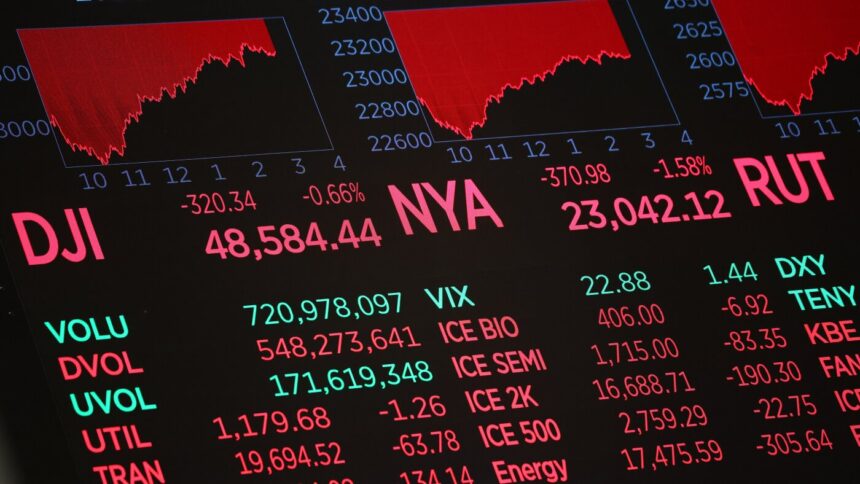
In the wake of escalating military tensions, particularly following the U.S. and Israel’s airstrikes against Iran, the financial markets have been in turmoil. On March 3, 2026, the Dow Jones Industrial Average plummeted over 400 points, reflecting a sharp decline of approximately 9% since its peak in February. This downturn can be attributed to mounting uncertainty surrounding the conflict’s duration and its potential implications for the broader economy. While this drop is not severe enough to be categorized as a bear market—defined as a fall of 20% from recent highs—it has nevertheless affected investment values for many Americans, impacting accounts tied to retirement and educational savings.
Financial advisors offer varying recommendations depending on individual circumstances, particularly regarding when an investor might need to access their funds. For those with a time horizon of ten years or more before withdrawals, the consensus is to remain calm and avoid impulsive actions. Historical data reveals that markets often recover from geopolitical disruptions, sometimes rebounding within months. The recent downturn may present a buying opportunity for long-term investors, as emphasized by financial experts who caution against making rash decisions in response to short-term volatility.
Conversely, those closer to retirement or needing to tap into investment accounts should consider rebalancing their portfolios toward safer, more stable assets. This strategy often involves moving from high-risk stocks to more conservative options, such as U.S. Treasury bonds, particularly as the target retirement date approaches. Many retirement plans and educational savings accounts are designed to automatically adjust investments based on the timeline for withdrawals, helping investors mitigate potential risks during times of market instability.
For investors requiring immediate access to cash, navigating the current market climate can be particularly challenging. Financial advisors recommend drawing from the best-performing accounts or funds to minimize losses instead of liquidating poorly performing assets, which could lock in greater losses. The key is to withdraw only what is necessary, allowing the remaining investments the opportunity to recover as the market stabilizes.
Overall, experts suggest taking a rational, measured approach—akin to the logical mindset of the fictional character Spock from “Star Trek.” This involves making prudent financial decisions, such as cutting unnecessary expenses or, in some cases, delaying retirement plans to avoid selling assets in a down market. As the situation develops, maintaining a clear focus on long-term investment strategies will be crucial for navigating the current tumultuous financial landscape.