During this year’s Super Bowl, a wave of advertisements generated by artificial intelligence failed to leave a positive impression, overshadowing the event’s traditional, high-quality commercials. While generative AI technology has improved, allowing brands to experiment with AI-driven content, many of the resulting ads came across as lackluster and somewhat chaotic.
Historically, Super Bowl ads have showcased creativity and production finesse, with brands investing heavily—between $8 million and $10 million for a mere 30 seconds. However, this year, the influx of AI-generated commercials underlined a concerning trend: as companies sought cost efficiency and rapid production timelines, the overall quality of the ads seemed to suffer.
One particularly criticized entry was from Artlist, an Israeli creative firm. Its advertisement, which aired only in New York and Los Angeles, attempted to demonstrate how everyday users could create engaging video content using their tools. However, the final product consisted of a disjointed series of animal clips paired with an unoriginal voice-over, failing to showcase creativity or evoke any real excitement. It left many viewers feeling as though the overarching message was more about mediocrity than empowerment.
Vodka brand Svedka also ventured into AI-generated territory with a commercial featuring a resurrected CGI character, Fembot, alongside a new companion, Brobot. The ad depicted the android duo at a club, embodying a rather bizarre storyline where they consume vodka. While Sazerac, the brand’s parent company, claimed the ad was designed to evoke a “pro-human” theme, many viewers found Brobot’s malfunctioning sequences unintentionally reminiscent of the technical flaws often associated with AI-generated content, leading to confusion about its intended message.
The ongoing conversation around AI-generated visuals extended to some of the Super Bowl’s most notable ads, including those featuring Hollywood stars. A Comcast Xfinity commercial that digitally de-aged actors from the “Jurassic Park” franchise raised questions about whether AI was responsible for the questionable CGI effects. Similar speculation surrounded Dunkin’s nostalgic ad featuring de-aged versions of stars from the ’90s sitcom era.
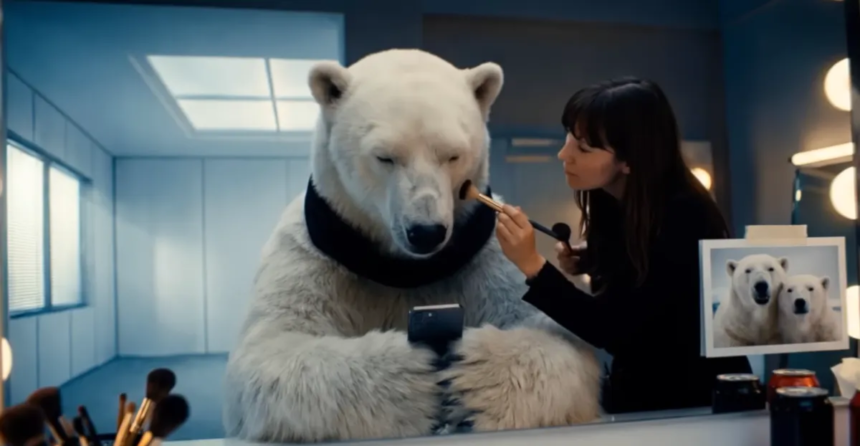
In a twist of irony, Pepsi Zero Sugar capitalized on the growing skepticism surrounding AI, featuring a CGI polar bear traditionally associated with Coca-Cola in a humorous blind taste test. Pepsi’s marketing vice president emphasized the necessity of a human touch in advertising, implicitly contrasting Pepsi’s approach with Coca-Cola’s recent foray into AI-generated campaigns.
As brands leaned into generative AI as a way to keep up with the fast-paced demands of modern advertising, the strategy faced backlash. Many viewers speculated not just about the presence of AI, but whether the quality of ads suffered as a result. Ultimately, the barrage of AI-induced spots may have dampened the excitement typically associated with Super Bowl advertising, leaving audiences questioning the value and authenticity of the technology rather than embracing it. The event underscored a critical point: while generative AI may offer speed and lower costs, the creative heft that usually defines memorable Super Bowl moments seemed conspicuously absent.