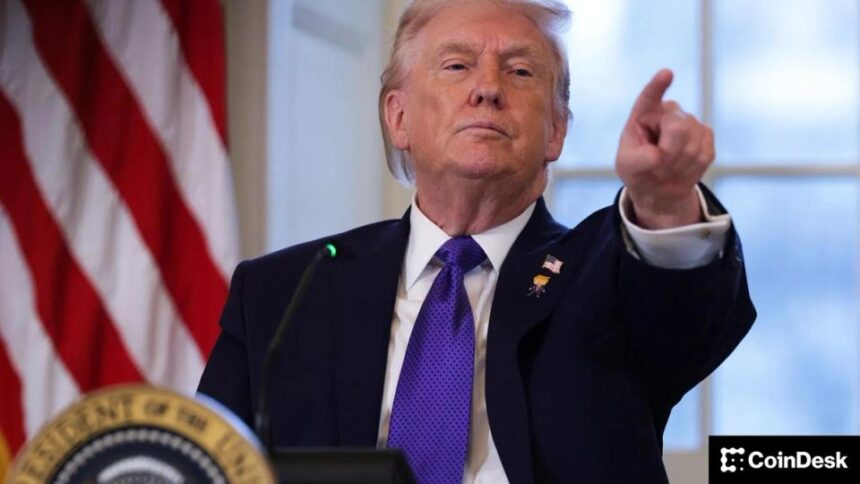
In a significant ruling, the U.S. Supreme Court has invalidated President Trump’s tariff regime, delivering a 6-3 decision that challenges the extent of executive power in imposing trade tariffs. The court emphasized that the magnitude and scope of the tariffs, imposed through a statute never previously used in such a manner, highlight a troubling lack of historical precedent. The ruling pointedly noted that the broad authority claimed by the President suggests an overreach beyond what is generally permissible.
The decision had an immediate impact on the cryptocurrency market. Bitcoin experienced a quick surge of approximately 2%, briefly climbing past the $68,000 mark, although this gain was short-lived, with the cryptocurrency retreating soon after to just below $67,000. This volatility in crypto stands in stark contrast to a more stable performance in traditional stock markets, where the Nasdaq composite index managed a respectable rise of 0.6%, reaching a session high.
On the economic front, new data released prior to the Supreme Court’s ruling revealed troubling signs of stagflation in the U.S. economy. The Commerce Department reported that the economy grew at a modest rate of 1.4% in the last quarter of 2025. Accompanying this sluggish growth was a year-over-year increase in core personal consumer expenditure prices, which rose to 3%, exceeding the anticipated 2.9% and higher than the previous rate of 2.8%.
Overall, the annual economic growth rate stood at 2.2%, marking the slowest growth since the onset of the COVID-19 pandemic in 2020. Art Hogan, the chief market strategist at B. Riley Wealth, analyzed the data as delivering a mixed message that highlights unexpectedly high inflation against a backdrop of slower growth. He suggested that this confusing economic landscape is likely to influence the Federal Reserve’s cautious approach to monetary policy adjustments moving forward.