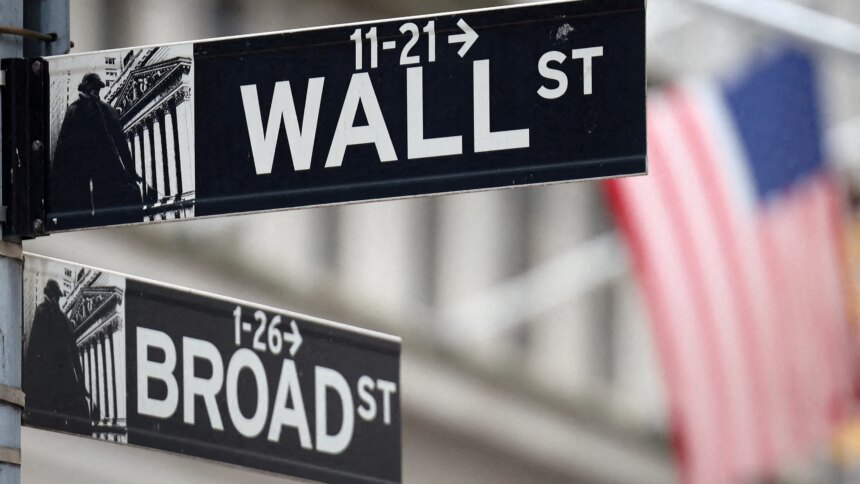
The stock market experienced a modest increase on February 20 following the Supreme Court’s recent ruling which struck down President Donald Trump’s extensive tariffs. As of 1:30 p.m., the broad market index registered a 0.4% rise, while the Nasdaq Composite saw an uptick of 0.6%. Meanwhile, the Dow Jones Industrial Average, which had initially dropped by 200 points earlier in the day, hovered around unchanged levels.
The Supreme Court’s decision, which was passed with a 6-3 vote, stated that the president lacked the constitutional authority to implement the tariffs as a primary tool of economic policy. Chief Justice John Roberts underscored the necessity for the president to have “clear congressional authorization” before wielding such powers unilaterally.
While the ruling signifies a victory for free trade advocates, the long-term financial implications remain uncertain. Experts suggest that the U.S. government might be liable to refund up to $200 billion to various domestic and international companies adversely affected by the tariffs, a move that could lead to rising stock prices among automakers and businesses reliant on imported goods.
Gennadiy Goldberg, head of U.S. rates strategy at TD Securities, remarked on the pressing questions surrounding the logistics of potential refunds, specifically whether the government is obliged to return tariff revenue, and the speed with which this might occur. He highlighted that the government’s subsequent actions following the ruling could significantly influence the market scenario.
In light of a potential large-scale repayment from the U.S. Treasury, Phil Blancato, chief market strategist at Osaic, warned that this could exacerbate the national deficit and potentially diminish credit standards, indicating a ripple effect through the financial system.
As the market responds to this landmark ruling, analysts and investors alike are keenly observing the administration’s next steps and the broader implications for the U.S. economy.