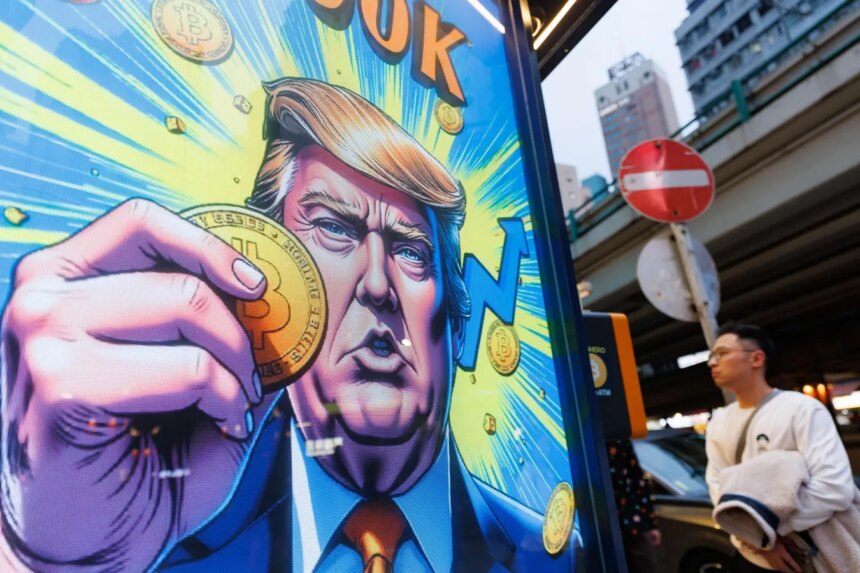
In a striking visual display of the current cryptocurrency climate, an advertisement featuring Donald Trump and Bitcoin has caught the attention of passersby in Hong Kong. This comes amid the backdrop of significant market volatility, spurred by U.S. reciprocal tariffs that have sent shockwaves through global financial markets and affected cryptocurrencies as well. Bitcoin, the largest cryptocurrency by market capitalization, saw a decline of more than 5%, trading at approximately $78,892.92 recently.
Amid these market fluctuations, data from Google Trends reveals a notable surge in global searches for “buy bitcoin,” reaching its highest level in five years. This increase in interest mirrors historical patterns; similar spikes occurred in August 2025 when Bitcoin was resolving from its then-record high near $123,000, and in February 2021 when the cryptocurrency first crossed the $50,000 threshold, triggering a wave of retail enthusiasm. These past surges were followed by significant price movements in subsequent months, leading investors to speculate whether the current behavior indicates a renewed interest in Bitcoin.
Despite the pervasive downturn, where Bitcoin has lost about 47% since its peak last October and touched a low of around $63,000, the rush to search for purchasing options could suggest that retail investors are preparing to re-enter the market. Market analysis platforms, such as Kalshi, have flagged the search trend, positing that this might be an indicator of a rebuilding appetite among retail investors. Supporting this view, on-chain data from analytics firm Glassnode shows that over 400,000 Bitcoin were accumulated within the $60,000 to $70,000 range since the beginning of the year. This indicates a shift in the supply dynamics, with an increasing share of non-exchange circulating Bitcoin accumulating in that price bracket.
Adding to the speculation, the number of large holders, or “whales,” possessing at least 1,000 Bitcoin has increased from 1,207 entities in October 2025 to 1,303. This suggests that larger players might be absorbing supply as smaller retail holders step back from the market. The interplay of these dynamics hints at a possible contrarian trend: rather than being deterred by price declines, new demand may be emerging.
Political commentary has also contributed to the growing interest in Bitcoin. In a recent State of the Union address, Trump called for a ban on congressional stock trading, a move that garnered bipartisan support and seemingly improved market conditions temporarily. Additionally, Eric Trump, speaking at a financial forum, reiterated his bullish stance on Bitcoin, predicting a price target of $1 million per coin, citing its impressive historical returns. His confidence in Bitcoin’s future appears to resonate with many investors who have experienced the ups and downs of cryptocurrency markets.
In the background, the ongoing legal troubles surrounding the quantitative trading firm Jane Street presents another layer of complexity. A lawsuit involving allegations of trading misconduct during the 2022 Terra-Luna collapse has incited speculation among traders regarding the sustained selling pressure that has plagued Bitcoin prices. However, on the day the lawsuit went public, Bitcoin prices unexpectedly surged, creating uncertainty around traditional price patterns.
From a broader macroeconomic perspective, increasing adoption of artificial intelligence is predicted to disrupt white-collar jobs, compelling central banks to reengage in aggressive monetary policies. Historically, such conditions have led to increased Bitcoin prices as investors seek refuge in digital assets amid concerns over traditional currency debasement. Insights from analysts suggest that economic downturns could drive central banks towards expansive monetary strategies, potentially benefiting Bitcoin.
While the recent surge in Google searches for Bitcoin does not guarantee a market bottom, it highlights a convergence of factors that could invite renewed interest. With a blend of retail curiosity, potential political support, diminishing selling pressure, and a macroeconomic backdrop conducive to asset appreciation, the current landscape of Bitcoin investment may hold opportunities for those looking to buy.