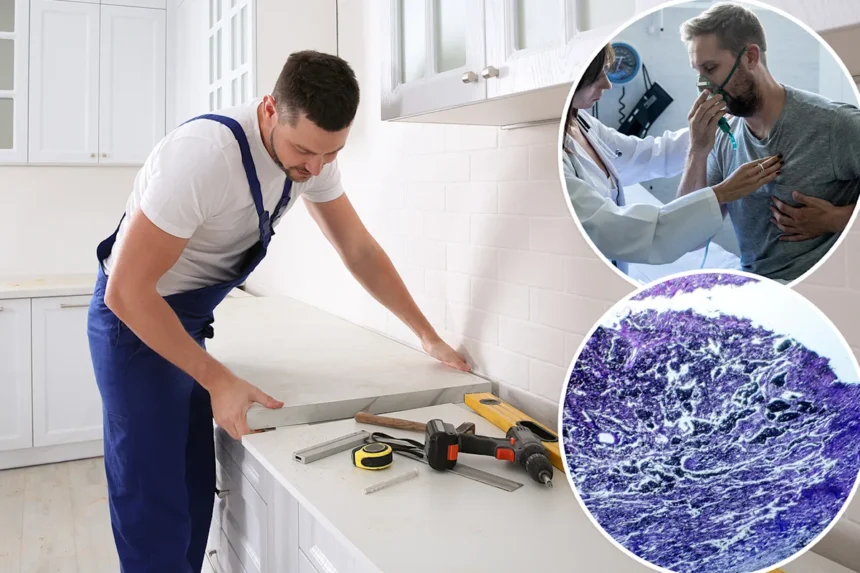
Luxe quartz countertops have become increasingly popular in the United States, with an astonishing 800% rise in imports. Their appeal lies in their durability, heat resistance, and sleek, natural appearance, making them a favored choice in kitchen design. However, this surge in popularity raises significant health concerns for the workers involved in their installation.
On Tuesday, the Massachusetts Department of Public Health issued a safety alert concerning silicosis, a serious and progressive lung disease. This alert follows the state’s confirmation of its first case of silicosis in a worker from the stone countertop fabrication industry. Traditionally associated with mining and construction, silicosis has emerged as a notable risk for stone fabricators working with engineered stone, which contains considerably higher silica content than natural stones like granite or marble.
As reported by the American Lung Association, approximately 2.3 million workers in the U.S. encounter silica exposure on the job. Silicosis results from inhaling crystalline silica dust produced during the processes of cutting, polishing, or grinding high-silica engineered quartz. Symptoms of this disease can include chronic coughing, mucus production, shortness of breath, fatigue, chest pain, and swelling in the legs. Although treatments exist to manage symptoms, there remains no cure for silicosis, which can deteriorate over time, potentially leading to severe illnesses such as lung cancer, tuberculosis, and eventual death.
The individual affected in Massachusetts had spent 14 years working for stone countertop fabrication and installation firms. Described by state officials as a Hispanic man in his 40s, his case underscores the urgent need for awareness and precautionary measures within this industry. Notably, the first reported U.S. case of silicosis linked to engineered stone appeared in Texas in 2015. A recent study from California identified 52 quartz countertop workers with silicosis, revealing a troubling statistic: 20 of them exhibited advanced stages of the disease, and 10 passed away before the study concluded.
Despite the seriousness of these health risks, public health authorities have not proposed a ban on quartz countertops. Instead, there are calls for enhanced regulations and safety measures. Emily H. Sparer-Fine, director of the Massachusetts Department of Public Health’s Occupational Health Surveillance Program, articulated the urgency of the situation, stating, “The confirmation of this case in Massachusetts is a tragic reminder that silicosis is not just a distant threat — it is here, and it is seriously impacting the health of workers in Massachusetts.” Sparer-Fine emphasized that everyone in the supply chain should strive to reduce risks by choosing materials that contain less silica and are less hazardous to health.
Proposed safety measures include improved ventilation and medical surveillance programs for workers to regularly monitor their health. Dr. Sheiphali Gandhi, a pulmonologist from UC San Francisco and co-author of the California study, highlighted the necessity of immediate action, warning, “If we don’t stop it now, we’re going to have hundreds, if not thousands, of more cases. Even if we stopped it now, we’re going to be seeing these cases for the next decade because [silicosis] takes years to develop.”
In response to growing concerns, the federal Occupational Safety and Health Administration (OSHA) introduced two respirable crystalline silica standards in 2016 aimed at safeguarding workers. These standards mandate that worker exposure remain below 50 micrograms of respirable crystalline silica per cubic meter of air during an eight-hour workday. However, findings from California safety officials in 2019 and 2020 revealed that approximately 72% of fabrication shops operating in the state were likely not compliant with these established silica safety standards, thereby endangering numerous workers. As a result, California’s OSHA implemented emergency rules for respirable crystalline silica in 2023, which were solidified into permanent regulations by late 2024.