







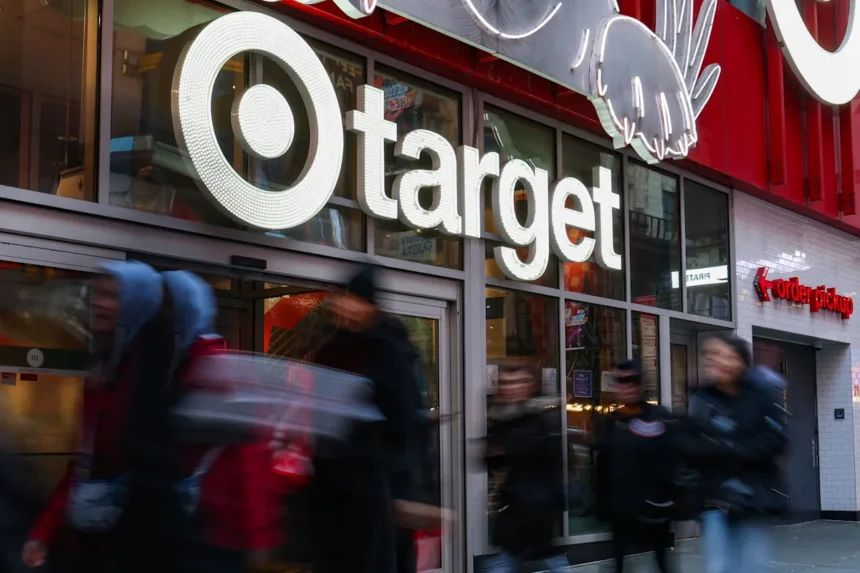
Target (TGT) recently issued stark warnings regarding its business outlook, further emphasizing the challenges consumers face in the current economic landscape. The discount retailer cut its full-year profit guidance, attributing this decision to a projected lackluster holiday season amidst an affordability crisis affecting essential areas such as food, healthcare, and housing costs.
Chief Commercial Officer Rick Gomez articulated the changing consumer behavior during a call with reporters, indicating that shoppers are becoming increasingly choosy with their spending. “Guests are stretching budgets and prioritizing value. They’re spending where it matters most, especially in food, essentials, and beauty,” Gomez said. He noted a noticeable shift towards searching for deals on discretionary items, signaling a broader trend of cautious consumer spending.
As a result of these economic pressures, Target’s shares saw a dip in premarket trading following the earnings report. The company experienced a year-over-year decline in the number of transactions and reported reduced sales in discretionary departments, including beauty and home furnishings.
In a bid to adapt to these challenges, Target announced plans to increase its capital expenditures by 25% in 2026, aiming to enhance store appearances. Last week, the retailer also reduced prices on 3,000 food and household essential items to attract budget-conscious shoppers.
Incoming CEO Michael Fiddelke, a veteran of the company, expressed optimism about Target’s ability to navigate the evolving economic landscape. Taking over officially on February 1, 2026, Fiddelke remains confident that the company can find a path to success, despite the current headwinds.
However, market analysts appear skeptical of Target’s assertions. Many have rated the company’s stock as Neutral or Sell, even as it has fallen 35% this year. Bank of America analyst Robert Ohmes specifically highlighted several risks, including declining digital sales growth, tariff impacts, and increasing competition from industry giants like Walmart and Amazon. He also noted that Target’s higher tariff exposure relative to Walmart could worsen its position in a dynamic sourcing environment.
Target’s financial performance during the latest earnings report showcased some concerning metrics. Net sales decreased by 1.5% year over year, totaling $25.3 billion, slightly surpassing estimates. Gross profit margins remained relatively stable at 28.2%, though slightly down from the previous year’s margins. Diluted earnings per share showed a decline of 3.9% to $1.78, which still exceeded estimates. Comparable sales fell by 2.7%, a stark contrast to last year’s growth.
These developments illustrate the uphill struggle Target faces as it navigates a challenging retail environment, with shifting consumer behaviors and economic pressures shaping the future of the business.


