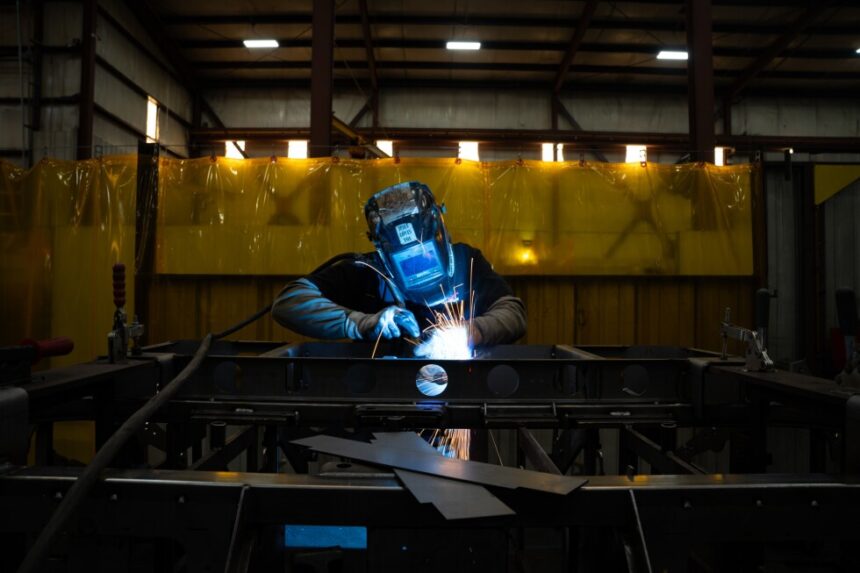
In recent months, the impact of tariffs associated with President Donald Trump’s economic policies has come under scrutiny, particularly from small business owners directly affected by these trade measures. One such individual is Jay Allen, the owner of Allen Engineering Corp., a manufacturing company based in northeast Arkansas specializing in industrial equipment for concrete installation and finishing. Allen, an initial supporter of Trump, believed the administration would provide the favorable economic conditions necessary for his business, including tax cuts and reduced regulations. Unfortunately, the tariffs implemented as part of Trump’s economic strategy have created significant challenges for his company.
The tariffs have notably increased the cost of critical components, including engines, steel, gearboxes, and clutches sourced from abroad. As a result, Allen found himself operating at a loss in 2025, with his workforce shrinking from 205 employees to a mere 140. To cope, he had to raise prices by 8% to 10%, which poses the risk of diminishing sales. Allen emphasized the unintended repercussions of the tariffs, stating that they are ultimately harming the very manufacturing sector they were intended to protect, particularly impacting working-class individuals.
Manufacturing jobs have been on the decline in the wake of these tariffs, as evidenced by a reported loss of 98,000 manufacturing jobs during Trump’s first year in office after his return to the White House. While the rationale behind these tariffs was to stimulate factory openings in the U.S. and generate federal revenue, the anticipated benefits have not yet materialized. Instead, American companies burdened by these tariffs have begun filing lawsuits against the Trump administration seeking refunds totaling over $130 billion. The federal deficit is projected to rise over the upcoming decade as well.
In response to the situation, the White House maintains that construction spending remains high and asserts that job creation in manufacturing is anticipated, fueled by productivity gains. However, critics point out that recent increases in factory construction are significantly influenced by programs initiated under President Joe Biden, including the CHIPS and Science Act. This legislation has bolstered spending on semiconductor manufacturing facilities, which contributed to a notable rise in construction rates, rather than the policies initiated by Trump.
While some businesses have voiced optimism about potential expansions thanks to tax incentives for investment in equipment and new facilities, the general sentiment does not indicate a robust manufacturing recovery. Economic expert Skanda Amarnath remarked that there is no evidence of a manufacturing renaissance driven by Trump’s tariffs.
The uncertainty surrounding tariff policy has made it difficult for manufacturers to strategize for the future. With over 50 actions related to tariffs taken by Trump, including numerous static threats, small businesses lack the clarity needed to make substantial financial decisions. For instance, Allen’s reliance on imported diesel engines means any move to produce them domestically would require a hefty investment, which seems risky amid the ambiguity surrounding future tariff policies.
Economists caution that without a cooperative approach to trade and tariffs—particularly regarding unfair practices by nations like China—the domestic manufacturing landscape remains vulnerable. Research indicates that it could take a decade for manufacturing employment to recover, but current conditions are far from ideal.
The toll of rising steel costs has been particularly acute. With steel tariffs initially set last March and later increased, companies that rely on these materials, like Calder Brothers in South Carolina, have faced surging prices. Although Trump claims these tariffs have revitalized American steel mills, downstream manufacturers are grappling with elevated costs that jeopardize their operations.
Additionally, despite intentions to diminish the trade imbalance with China, the reality is stark: last year, the U.S. manufacturing trade deficit grew, while China’s trade surplus reached a record high of $1.2 trillion. Critics highlight that Trump’s strategy inadequately addressed systemic issues in international trade, notably the lack of organized coalitions to counteract currency manipulation and unfair subsidies.
As discussions about tariffs and trade continue, the divide between intended objectives and actual outcomes underscores the complexities within U.S. manufacturing and economic policy.