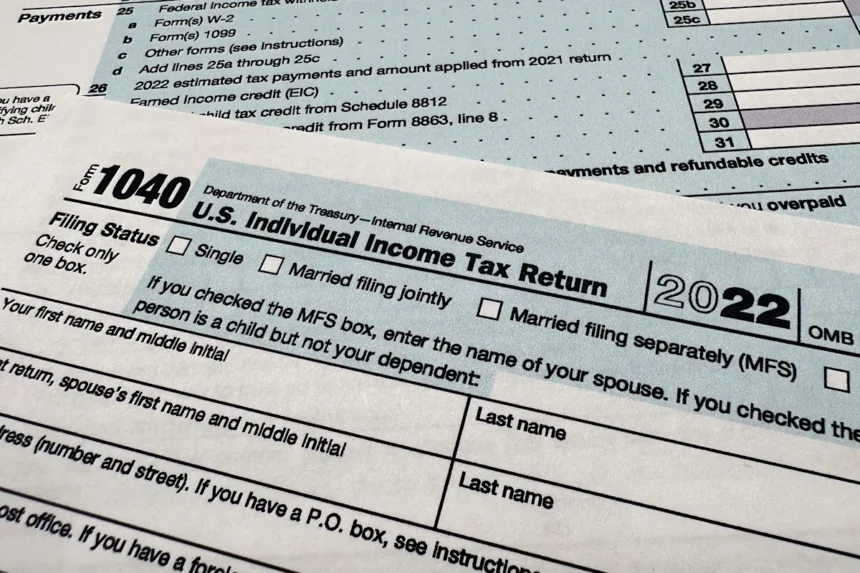
Tax season has officially begun, with taxpayers having until April 15 to file their returns with the IRS. Experts urge individuals to start organizing their documentation now to alleviate stress as the deadline approaches. Tom O’Saben, director of tax content at the National Association of Tax Professionals, advises against procrastination but emphasizes the importance of avoiding rushed submissions.
To prepare effectively, individuals should gather essential documents that include Social Security numbers, W-2 forms for employed individuals, 1099 forms for the self-employed or those who were unemployed, and records of any eligible deductions like educational expenses and medical bills. Considering the recent changes due to the Republican tax bill signed into law last summer, there are new deductions available that taxpayers should be aware of. Notably, there is no tax on qualified tips and overtime, along with deductions for car loan interest and for individuals aged 65 or older.
Last year, the average tax refund was $3,167, and analysts predict that this may increase by an additional $1,000 this year due to favorable changes in tax laws. In the previous tax season, over 165 million individual income tax returns were processed, with a remarkable 94% submitted electronically.
Understanding your responsibilities is crucial. O’Saben recommends gathering all necessary documents and retaining copies from previous years. Taxpayers can also create an identity protection PIN with the IRS to mitigate the risk of identity theft. Upon establishment, this PIN will be a requirement for filing returns.
Changes to deductions include an increase in the standard deduction: $15,750 for single filers, $31,500 for married couples filing jointly, and $23,625 for heads of households. A significant update involves the state and local tax (SALT) deduction, which has seen its cap rise from $10,000 to $40,000. This adjustment, known as the Working Families Tax Cut, is especially beneficial for residents in high-tax states like California and New York.
While the updated SALT deduction will provide some relief, taxpayers who historically have not itemized their deductions may want to reconsider this year. O’Saben suggests evaluating individual finances to determine if itemizing could yield a better tax outcome based on factors like state and property taxes, mortgage interest, and charitable contributions.
A new deduction relating specifically to qualified tips is also introduced. This deduction is limited to industry-specific cases, such as bartenders and food servers, allowing a maximum deduction of $2,500, with limitations based on income levels.
Resources for filing have changed; the IRS’s Direct File electronic system will not be available this year, but IRS Free File continues to offer free guided tax preparation for those earning $89,000 or less. Taxpayers can choose from various IRS partners, in addition to seeking assistance from certified public accountants or licensed professionals. Two significant programs funded by the IRS, Volunteer Income Tax Assistance (VITA) and Tax Counseling for the Elderly (TCE), provide additional avenues for help.
To avoid common filing errors, it’s important to ensure your name matches your Social Security card—especially after life changes such as marriage. Taxpayers should search for any relevant online tax statements, personifying awareness that documents might be paperless. Furthermore, accurate income reporting from all sources is crucial to avoiding IRS audits.
The Child Tax Credit remains at $2,200 per child, with $1,700 of that amount refundable through the Additional Child Tax Credit, contingent on meeting specific income thresholds. For individuals expecting a refund, the IRS promotes direct deposit to expedite processing, as paper checks are increasingly being phased out.
Tax scams proliferate during this season, so experts advise vigilance. The IRS does not contact taxpayers through unsolicited means like calls or texts. Authenticity in communications is key, especially when dealing with tax preparers.
Lastly, maintaining copies of past tax returns for five to seven years is recommended for good record-keeping and in case of audits by the IRS. By taking these proactive steps and remaining informed, taxpayers can navigate this tax season with greater confidence and ease.