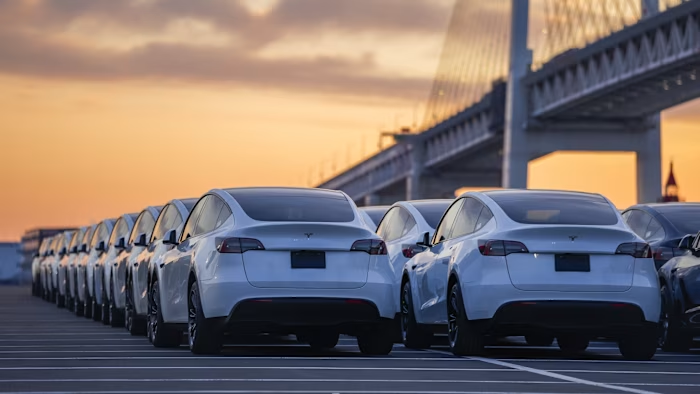
In a significant turn of events in the electric vehicle (EV) market, Tesla has lost its position as the world’s largest electric vehicle manufacturer, overtaken by its Chinese rival, BYD. Tesla’s vehicle deliveries dropped to 1.64 million in 2025, marking a 9% decrease from 1.79 million in the previous year. Meanwhile, BYD reported impressive growth, selling 2.26 million pure EVs—an increase of 28%—largely attributed to its successful expansion into European and other international markets.
This shift comes on the heels of BYD consistently outselling Tesla on a quarterly basis for some time. The latest figures solidify BYD’s lead in annual deliveries, spotlighting a concerning trend for Tesla as it faces its second consecutive year of declining sales. The company previously enjoyed a steady increase in deliveries every year from 2011 to 2023.
Tesla’s recent challenges have been exacerbated by several factors. The cancellation of U.S. tax credits for EV purchases has introduced a new strain on sales, while backlash from some consumers, tied to CEO Elon Musk’s political activities and his public disputes with U.S. President Donald Trump, have further complicated matters. In the final quarter of 2025, Tesla managed only 418,227 vehicle deliveries, a 16% drop from the same time last year, falling short of market expectations of 423,000 deliveries.
In an unusual move, Tesla released analyst forecasts for its annual deliveries prior to the official announcement, likely aimed at managing market expectations amid declining figures. To boost sales, Tesla launched a refreshed version of its flagship Model Y and a lower-cost, simplified variant. However, these efforts have not generated the anticipated recovery, particularly as a flood of affordable EVs from both Chinese and Western competitors enters the market.
Europe has emerged as a significant challenge for Tesla, with ongoing difficulties in securing regulatory approval for its full self-driving (FSD) technology. Analysts predict that the FSD technology may receive European regulatory clearance in the first half of 2026, which could help alleviate some pressure on Tesla’s operations.
Despite a record surge in global deliveries during the third quarter of 2025, when U.S. consumers rushed to take advantage of the EV tax credits before they expired, a marked decline in sales is anticipated in the U.S. market. Experts foresee car manufacturers increasingly pivoting towards hybrids and traditional combustion engines due to shifting policies under Trump’s administration.
Looking ahead, projections indicate Tesla may deliver around 1.75 million vehicles in 2026, yet this forecast would still fall short of its 2024 figures. In response to declining sales within its core automotive business, Musk has redirected focus toward advancing autonomous driving, artificial intelligence, and robotics. Investor enthusiasm surrounding Tesla’s potential self-driving taxi service propelled its stock to an all-time high of $489.88 in mid-December, although shares concluded 2025 just under $450, maintaining a market capitalization exceeding $1.4 trillion.
In stark contrast to Tesla’s struggles, BYD has actively enhanced its presence in Europe with a suite of new, affordable EV models. The company is set to begin local production at a new facility in Hungary, responding to competitive pressures domestically amid China’s crackdown on enthusiastic pricing strategies.