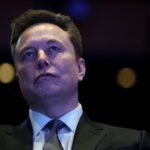
Tesla’s annual shareholders meeting in Austin, Texas, witnessed significant developments as shareholders cast their votes on CEO Elon Musk’s ambitious pay plan. An impressive 75% of the voting shares showed support for the nearly $1 trillion compensation package designed for Musk, despite the recommendations against it from major proxy advisors, Glass Lewis and ISS.
The board initially proposed this pay plan in September, and its approval comes amid Musk’s ongoing discussions about enhancing his influence within the company. Under the new arrangement, Musk’s share ownership in Tesla is expected to rise dramatically from around 13% to an imposing 25%, which translates to more than 423 million additional shares. This would further solidify his position as the world’s richest person.
The compensation package is structured into 12 tranches of shares that will be assigned based on Tesla achieving specific milestones over the next ten years. The first tranche is contingent on Tesla reaching a market capitalization of $2 trillion, an ambitious target given its current market cap of $1.54 trillion. The subsequent nine tranches are tied to further increments of $500 billion in market valuation, extending up to a staggering $6.5 trillion. To unlock the last two tranches, Tesla’s market value would need to ascend to $8.5 trillion.
In addition to market cap milestones, the pay plan outlines a series of operational goals that include delivering 20 million vehicles, establishing 10 million active subscriptions for Full Self-Driving (FSD) technology, delivering 1 million robotics units, and deploying 1 million robotaxis for commercial use. Presently, Tesla has delivered over 8 million vehicles, according to the latest proxy statement.
A point of contention arises around the specifics of the FSD subscriptions, as the proposal does not clarify whether these must be paid subscriptions or could include trials. Tesla is currently promoting its partially automated driving system, named “FSD Supervised,” in the U.S., with plans to elevate this technology to eliminate the requirement for human supervision in the future.
The proposal also sets forth a series of earnings milestones starting from an adjusted profit of $50 billion, progressing up to $400 billion. In recent reports, Tesla disclosed an adjusted EBITDA of $4.2 billion in the third quarter.
Interestingly, reports suggest that Musk could potentially secure tens of billions without necessarily meeting most operational benchmarks. He could achieve over $50 billion by merely fulfilling some of the less challenging targets established by the board. Additionally, the plan includes “covered events” that could allow Musk to earn shares without meeting all operational milestones, covering aspects such as natural disasters, wars, pandemics, and any changes in regulations that might impede Tesla’s ability to manufacture or sell its products.
The shareholder vote comes after a Delaware Court of Chancery ruling last year, which deemed Musk’s previous 2018 pay plan improperly granted by the Tesla board and mandated its rescission. Musk is currently appealing this ruling, with the outcome pending from the Delaware State Supreme Court.
Beyond his role at Tesla, Musk is heavily involved in multiple ventures including xAI, SpaceX, Starlink, Neuralink, and The Boring Company. He has also been actively engaged in political arenas, working to support various initiatives, including efforts related to President Donald Trump’s campaigns.
As the dust settles from this significant shareholder decision, attention now turns to how this pay plan will impact Tesla’s growth trajectory and Musk’s influence in the automotive and tech sectors.