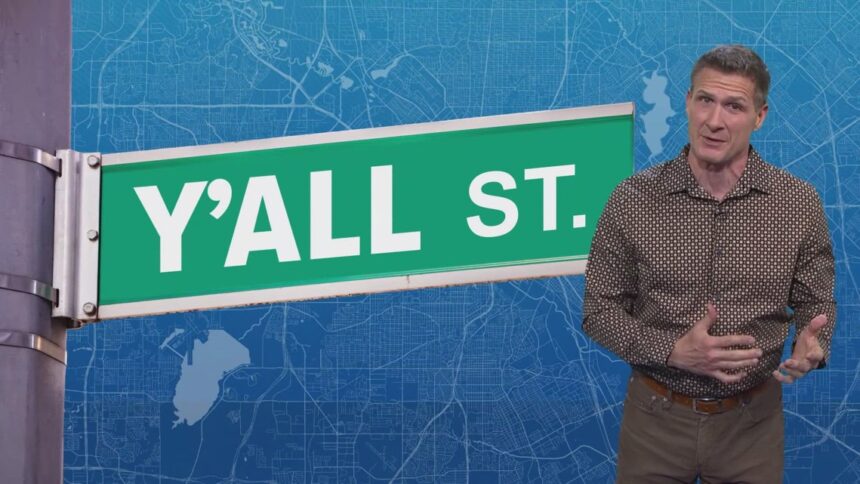
In a significant shift in the financial landscape, Texas is rapidly establishing itself as an alternative hub for major stock exchanges, drawing interest and investment away from the traditional dominance of Wall Street in New York City. The Dallas-Fort Worth (DFW) area is at the forefront of this movement, with stakeholders coining the term “Y’all Street” to describe the burgeoning financial scene.
Edward Crawford, Co-Founder and Co-CEO of Coltala Holdings, emphasizes the pride of Texas and its evolving position in the financial world. He notes that there is a growing sentiment among business owners in the state that if they were to go public, they would prefer to do so locally. “There are two financial capitals now in the U.S.,” Crawford stated, underscoring Texas’s emergence alongside New York.
The influx of major financial institutions is palpable. Crawford mentions that many significant banks, including Goldman Sachs and JP Morgan, have established a strong presence in Texas. “There are more people from JP Morgan here than there are in New York,” he adds, highlighting the shift in talent and resources towards the Lone Star State.
Excitement builds as Crawford predicts a substantial increase in capital, job opportunities, and overall economic growth in Texas. With his recent appointment to the Advisory Board of NYSE Texas—an extension of the New York Stock Exchange launched with great fanfare at AT&T Stadium—he is positioned at the heart of this transformation.
Competing against NYSE Texas, the recently launched Nasdaq Texas also aims to attract new listings and established firms. Additionally, the up-and-coming Texas Stock Exchange (TXSE) has made a bold entry into the market, aiming to challenge the perceived duopoly of the New York exchanges. TXSE’s promotional efforts feature a striking advertisement depicting a Texas longhorn overpowering the Wall Street bull, signaling its intent to disrupt the status quo.
Crawford acknowledges the potential for a diverse range of offerings in Texas’s financial market landscape. “If you look at the growth rates of Texas, there is enough for all three exchanges… or at least two of the exchanges to do well,” he remarks. He notes that much will depend on the continued economic expansion within the state.
While NYSE Texas currently boasts over 100 listed companies—primarily dual listings that also trade on the NYSE—Crawford expresses optimism about the prospects for new local companies to go public in the near future. “I think you might see a couple that are saying, ‘I would like to just go,'” he mentions, reinforcing the idea that interest in Texas-based listings is growing.
Speed and efficiency in business operations are prominent features that set Texas apart. Crawford, who has experience in various global markets, praises the state’s ability to facilitate rapid business activities. “The ability to get something done quickly and efficiently in the state of Texas is the fastest I’ve ever seen anywhere that I’ve lived on this planet,” he states.
However, potential concerns arise regarding the investor-friendliness of the Texas exchanges. Critics point out that the high stock ownership required to pursue legal action against companies could disenfranchise smaller retail investors. Crawford counters this point by highlighting the presence of diverse investors in Texas’s private companies, asserting that the state offers protections for all constituencies while striving for efficiency and reduced red tape.
As Texas navigates this transformative period in its financial landscape, the implications for businesses and investors are profound. Stakeholders anticipate substantial developments over the next few years as the competition among these new exchanges unfolds, marking an exciting chapter in the evolution of U.S. financial markets.